As a supplier of DIN 6796 Heavy Duty Bolt Spring Washers, I’ve received numerous inquiries about how these washers perform in low – temperature environments. In this blog, I’ll share in – depth knowledge based on both theoretical understanding and practical experience. DIN 6796 Heavy Duty Bolt Spring Washer

1. The Structure and Function of DIN 6796 Heavy Duty Bolt Spring Washers
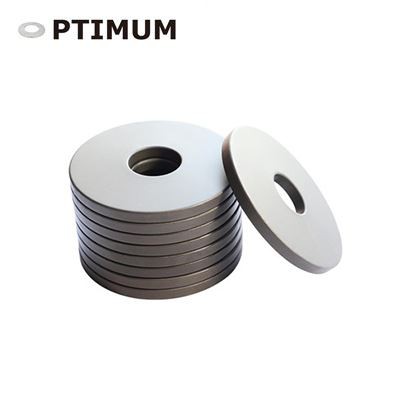
Before diving into the performance in low – temperature environments, it’s essential to understand the basic structure and function of DIN 6796 Heavy Duty Bolt Spring Washers. These washers are designed with a conical shape, which allows them to provide a high spring force when compressed between the nut and the surface of the connected part.
The main function of these washers is to prevent the loosening of bolts due to vibrations or dynamic loads. When a bolt is tightened, the spring washer is compressed, storing elastic energy. This energy is then released gradually, maintaining a constant pre – load on the bolt. This pre – load is crucial for ensuring the integrity and stability of the joint.
2. Effects of Low – Temperature on Materials
The performance of DIN 6796 Heavy Duty Bolt Spring Washers in low – temperature environments is closely related to the materials they are made of. Most of these washers are made of high – carbon steel or alloy steel.
2.1 Material Hardness and Brittleness
At low temperatures, the hardness of the steel increases. This is because the movement of atoms in the steel lattice is restricted at lower temperatures. While increased hardness can sometimes be beneficial as it may resist deformation better, it also makes the material more brittle.
Brittleness is a major concern in low – temperature applications. A brittle material is more likely to crack or fracture under stress. For DIN 6796 washers, this means that they may not be able to withstand sudden impacts or high – stress loads as well as they would at normal temperatures.
2.2 Reduction in Elasticity
Elasticity is a key property of spring washers. The ability to store and release energy depends on the material’s elasticity. In low – temperature environments, the elasticity of the steel used in the washers decreases. This reduction in elasticity means that the washers may not be able to provide the same level of spring force as they do at normal temperatures.
3. Performance Testing in Low – Temperature Environments
To accurately assess how DIN 6796 Heavy Duty Bolt Spring Washers perform in low – temperature environments, we conduct a series of tests.
3.1 Compression Tests
We place the washers in a low – temperature chamber and subject them to compression tests. The chamber is set to different low – temperature levels, such as – 20°C, – 40°C, and – 60°C. During the tests, we measure the spring force exerted by the washers at different compression levels.
The results show that as the temperature decreases, the spring force of the washers decreases. At – 60°C, the spring force can be significantly lower than at room temperature. However, even at these low temperatures, the washers still maintain a certain level of spring force, which is sufficient to prevent bolt loosening in many applications.
3.2 Fatigue Tests
In addition to compression tests, we also conduct fatigue tests. Fatigue is a common failure mode for spring washers, especially in applications with repeated loading. In low – temperature environments, the fatigue life of the washers may be affected.
We subject the washers to a large number of loading cycles at low temperatures. The results indicate that the fatigue life of the washers decreases as the temperature drops. This is mainly due to the increased brittleness of the material, which makes it more prone to crack initiation and propagation under cyclic loading.
4. Applications in Low – Temperature Environments
Despite the challenges posed by low – temperature environments, DIN 6796 Heavy Duty Bolt Spring Washers still have a wide range of applications.
4.1 Cold Storage Facilities
In cold storage facilities, where the temperature can be as low as – 20°C or even lower, these washers are used to secure various equipment. For example, they are used to fasten the shelves and racks in the cold storage rooms. The ability of the washers to maintain a certain level of pre – load helps to ensure the stability of the equipment, even in the cold environment.
4.2 Arctic and Antarctic Expeditions
In polar regions, where the temperature can reach extremely low levels, DIN 6796 washers are used in the construction of research stations and equipment. They are used to secure the structures and machinery, providing reliable fastening in harsh conditions.
5. Mitigating the Effects of Low – Temperature
To improve the performance of DIN 6796 Heavy Duty Bolt Spring Washers in low – temperature environments, several measures can be taken.
5.1 Material Selection
Choosing the right material is crucial. Some alloy steels are specifically designed to have better low – temperature performance. For example, steels with a high nickel content can have improved toughness and ductility at low temperatures. By selecting these materials, the brittleness of the washers can be reduced, and their fatigue life can be extended.
5.2 Surface Treatment
Surface treatment can also enhance the performance of the washers in low – temperature environments. A proper coating can protect the washers from corrosion, which is more likely to occur in cold and humid conditions. Additionally, some coatings can improve the lubrication properties of the washers, reducing the friction between the washer and the nut or the connected part.
6. Conclusion
In conclusion, DIN 6796 Heavy Duty Bolt Spring Washers can perform reasonably well in low – temperature environments, although they face some challenges. The decrease in spring force and the increase in brittleness are the main issues, but through proper material selection and surface treatment, these problems can be mitigated.
NFE25511 French Serrated Spring Washers If you are looking for high – quality DIN 6796 Heavy Duty Bolt Spring Washers for your low – temperature applications, we are here to help. Our washers are manufactured with strict quality control and are suitable for a wide range of low – temperature environments. We are more than willing to discuss your specific requirements and provide you with the best solutions. Contact us to start a procurement negotiation and ensure the reliability of your fastening systems in low – temperature conditions.
References
- ASM Handbook Volume 1: Properties and Selection: Irons, Steels, and High – Performance Alloys.
- DIN 6796 Standard Specification for Heavy Duty Bolt Spring Washers.
- Research papers on the mechanical properties of steels at low temperatures from relevant scientific journals.
Yangzhou Optimum Spring Manufacturing Co., Ltd.
As one of the most professional din 6796 heavy duty bolt spring washer manufacturers and suppliers in China, we’re featured by quality products and good service. Please rest assured to buy customized din 6796 heavy duty bolt spring washer made in China here from our factory. For more information, contact us now.
Address: No.9 West of Shuangtang Rd, Yangzhou, P.R. China 225000
E-mail: susie@optimum-spring.com
WebSite: https://www.optimum-spring.com/
