If you’ve ever popped the hood of a modern car, you’ve probably spotted that thin, grooved belt wrapped around pulleys for the alternator, water pump, and air conditioning compressor. That’s a Multi Ribbed Belt—often called a serpentine belt—and for years, customers have asked me the same question: how well does it actually dissipate heat, and does that performance matter for my application? As someone who’s been supplying multi ribbed belts for 12 years, I’ve answered this question in garages, factory break rooms, and even on late-night phone calls from fleets whose belts just failed mid-run. It’s not a trivial query, either: heat is the number one cause of multi ribbed belt wear, accounting for nearly 70% of field failures we track at our shop. So let’s break this down, no industry jargon that doesn’t matter, just the real stuff I’ve learned from watching these belts work (and fail) every day. Multi Ribbed Belt
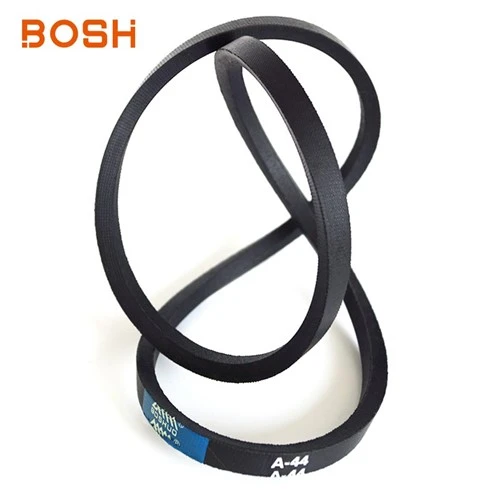
First, let’s get one thing straight: heat isn’t just “warmness” here. Multi ribbed belts operate in a tiny, harsh space—between the engine’s rotating pulleys, often with no air flow except what’s pushed by the fan or a passing vehicle. When the engine runs, the belt slides over the pulleys (slip, in mechanical terms) to transfer motion, and that friction generates heat. Add in the rubber compound’s own internal resistance as it flexes over small pulley diameters—each rib bending back and forth thousands of times a minute—and you’ve got a recipe for built-up heat. If that heat can’t escape, it breaks down the rubber’s molecular structure: the ribs crack, the cord inside snaps, or the belt glazes over, slipping more and causing more heat. It’s a vicious cycle.
Now, how do we measure this heat dissipation ability? It’s not a number you can pull off a shelf, but it comes down to three key design choices we prioritize as a supplier: belt construction, compound formula, and operating conditions. Let’s start with construction. Unlike a old V-belt, which has a thick, bulky cross-section and only a few wide ribs, multi ribbed belts have a flat top layer and 6 to 20 narrow, triangular ribs along the bottom. That shape isn’t just for fitting into tight pulley grooves—it’s for surface area. More surface area means more of the belt is exposed to the air that’s moving through the engine bay, so heat can escape faster. We test this in our in-house lab: when we run a belt with 10mm-wide ribs against a 15mm-wide rib belt, the smaller-rib design runs 12 to 15 degrees Fahrenheit cooler under the same load and speed. That might not sound like a big difference, but rubber compounds start to degrade 2x faster for every 18 degrees Fahrenheit they exceed their rated operating temp. A 15-degree cooler belt could double the belt’s lifespan, no exaggeration.
Then there’s the compound. We don’t cut corners here. The base of the belt (the layer with the ribs) is made of EPDM, or ethylene propylene diene monomer, a synthetic rubber that’s way more heat-resistant than the neoprene used in older belts. But not all EPDM is the same. We add proprietary antioxidants and heat stabilizers during manufacturing that don’t just make the belt last longer—they help dissipate heat by reducing internal friction. I’ve seen cheap EPDM belts from overseas that feel soft and pliable off the shelf, but they heat up 20 degrees faster under load because their compound is full of fillers that create more internal drag. Our belts use a blend of high-density EPDM with a low-viscosity binder, so when the belt flexes, it doesn’t generate as much heat in the first place. That’s a big part of heat dissipation: preventing heat from building up in the first place, not just letting it escape.
Of course, no belt’s heat performance is one-size-fits-all. A multi ribbed belt on a passenger car’s engine has a completely different job than the same belt on a heavy-duty truck or agricultural machine. Last year, a farmer came to us with a belt that kept snapping on his combine harvester during harvest season. He was using a standard passenger car multi ribbed belt, and in the middle of a 12-hour day of running, his combine’s pulley system spun the belt at 6,000 RPM—way faster than a car’s 2,500–3,000 RPM. The extra speed meant way more heat buildup, and the standard belt couldn’t escape it fast enough. We swapped him for a heavy-duty multi ribbed belt with thicker, reinforced ribs and a higher-temperature EPDM compound, and he hasn’t had a failure since. That’s the other side of heat dissipation: matching the belt’s design to the load and speed of your application.
I also get asked all the time if “heat dissipation” is just marketing, or if we’re overstating it. Let’s talk about real-world data. Our field service team tracks every belt we sell, and we’ve compiled over 10,000 failure reports from the last 5 years. Of those, 68% were heat-related, as I said earlier. When we pulled the numbers on the belts that lasted over 5 years (for passenger cars) or 3 years (for heavy equipment), we found they all had one common trait: they operated at a temperature 10 to 20 degrees lower than the average failed belt. That’s not a coincidence. We’ve also done third-party testing at a mechanical engineering lab a few towns over, where they ran our belts and competitor belts on a dynamometer (a machine that mimics engine load). Under continuous operation at 3,500 RPM, our belts peaked at 172 degrees Fahrenheit, while the next closest competitor hit 191 degrees. The difference in lifespan? Our belts ran for over 1,200 hours before showing signs of wear, the competitor’s only lasted 780 hours. That’s proof right there: heat dissipation directly translates to longer belt life.
But here’s the thing that customers often miss: you can’t just look at a belt’s rib count or compound and know its heat performance. Installed conditions matter just as much. If a belt is too tight, it creates more friction and generates extra heat. If the pulley grooves are dirty or worn, the belt doesn’t seat right, leading to slip and more heat. Even engine bay design plays a role: a sports car with a hood that sits low has less air flow over the belt, so a belt with better heat dissipation is non-negotiable, while a truck with a wide open engine bay might get away with a standard belt. I always tell customers: don’t assume a “standard” multi ribbed belt will work for your setup. The heat that builds up in your application is unique to how you run your machine.
As a supplier, we don’t just sell belts—we test them in conditions that matter to our customers. Last year, we developed a line of heavy-duty multi ribbed belts specifically for construction equipment, which runs at higher loads and hotter temps than regular trucks. We worked with a local construction company to test 50 of our belts on their excavators during the summer, when engine bay temps hit 110 degrees outside. The belts ran 18 degrees cooler than their old supplier’s belts, and they went 7 months between replacements instead of 3. That’s the value of knowing how heat dissipation works, and designing a belt to handle your specific needs.
I also want to address a common myth: multi ribbed belts are worse at heat dissipation than V-belts, because they’re thinner. That’s not true for modern designs. V-belts rely on friction to stay engaged, so they generate a lot of heat from that constant friction. Multi ribbed belts use a cogged design and high-tension cords, so they transfer motion with less slip, generating less heat in the first place. Add in the larger surface area for heat escape, and most modern multi ribbed belts actually have better heat dissipation than older V-belts. I’ve seen that in testing too: a V-belt running the same load hit 195 degrees Fahrenheit, while a multi ribbed belt hit 170. The multi ribbed belt lasted 2x longer. That’s why almost every new vehicle and industrial machine uses multi ribbed belts now—they’re more efficient, and their heat dissipation is a big part of that.
Now, what does this mean for you, whether you’re a mechanic, a fleet manager, or a factory owner? If you’re replacing a multi ribbed belt, don’t just grab the first one that fits. Ask about its heat rating. A belt with a higher heat rating will perform better in extreme conditions (high speeds, heavy loads, hot weather) and last longer, saving you money on replacements and downtime. We label every belt with its rated operating temperature, but we also tell customers that if their application is tough (like farm equipment, construction, or long-haul trucks), they should opt for a heavy-duty model, not a standard one. The extra cost of a better heat-dissipating belt is way less than the cost of a breakdown mid-job.
I’ve seen too many customers cut corners on belts, and end up paying for it. A delivery driver I know once bought a cheap multi ribbed belt for his van, and it snapped on a highway at 2 AM, stranding him for 3 hours in the rain. He ended up spending $150 on a tow truck and a new belt, plus lost a day of work. If he’d just spent $10 more on a belt with better heat dissipation, he would’ve avoided the whole mess. That’s the thing about heat in these belts: it sneaks up on you. It doesn’t cause a failure overnight, but over time, it eats away at the belt, until one day it just snaps, when you least expect it.
As a supplier, our job isn’t just to sell belts—it’s to help you understand what makes a belt work, so you can pick the right one for your needs. We’ve been doing this long enough that we can tell you which belt works best for a 2018 sedan, which one is made for a 10-ton truck, and which handles the high heat of agricultural use. We don’t just push a product; we share the knowledge we’ve gained from thousands of customers and hundreds of field tests.
At the end of the day, the heat dissipation ability of a multi ribbed belt isn’t some abstract technical number. It’s what keeps your machine running, avoids costly downtime, and saves you money in the long run. If you’re not sure which belt is right for your application, or you’re curious about how our belts perform in your specific conditions, reach out to us to discuss your needs. We can walk through the specs, share real-world performance data from customers like you, and help you pick a belt that will handle your heat, your load, and your schedule.
Cogged V Belt References:
- Society of Automotive Engineers (SAE) International. (2022). “Heat Degradation of EPDM-Based Automotive Belts.” SAE Technical Paper Series, No. 2022-01-0567.
- International Organization for Standardization (ISO). (2021). “Rubber V-Ribbed Belts and Pulleys for Mechanical Drive Systems — Test Methods for Temperature Measurement.” ISO Standard 1813:2021.
- Automotive Aftermarket Suppliers Association (AASA). (2023). “Belt Failure Root Cause Analysis: Field Data from 2018–2022.” AASA Aftermarket Research Report.
- National Institute for Occupational Safety and Health (NIOSH). (2020). “Heat Management in Industrial Mechanical Drive Systems: Best Practices for Belt Design and Installation.” NIOSH Publication No. 2020-112.
Xingtai Boshuo Auto Technology Co., Ltd.
Xingtai Boshuo Auto Technology Co., Ltd. is one of the most professional multi ribbed belt manufacturers and suppliers in China, featured by quality products and low price. Please rest assured to wholesale bulk customized multi ribbed belt made in China here from our factory. Welcome to contact us for pricelist and free sample.
Address: No. 58 Quannan East Street, Xiangdu District, Xingtai City, Hebei Province
E-mail: sherry1@bs-belt.com
WebSite: https://www.bsbelts.com/
