If you’ve ever called an ambulance during a cold snap, you might’ve noticed something: the vehicle doesn’t stutter on a dark, icy road, the defibrillator doesn’t lock up mid-code, and the paramedic’s gloves stay warm enough to do their job. For the last 12 years, I’ve run an ambulance supply business that serves communities across the northern U.S. and Canada—places where temperatures drop to -40°F (-40°C) in winter, where black ice can hide under a layer of fresh snow, and where a broken ambulance on a side road can mean the difference between life and death for someone having a heart attack or stroke. People often ask me, “How do ambulances actually work in these brutal cold climates?” It’s not magic, and it’s not just “adding a heater.” It’s a system of small, science-backed choices that add up to keeping care moving when the weather turns lethal. Ambulance

Let’s start with the basics: the ambulance itself. Most standard ambulances are built on light truck or van chassis, but for cold climates, we don’t just pick any chassis. We spec ¾- or 1-ton trucks, not half-tons, because they have heavier-duty engines, transmissions, and cooling systems that can handle low temps. Let’s talk about engines first. A gas engine might struggle to turn over at 20 below; a diesel has more torque, but old, under-maintained diesel is even worse. That’s why every cold-climate ambulance we supply comes with block heaters, grid heaters, and fuel tank heaters. A block heater warms the engine block overnight, so the oil stays thin enough to circulate when you turn the key. A grid heater heats the air going into the intake manifold, so the fuel-air mix ignites instead of just sitting there like slush. Fuel tank heaters—usually small, low-wattage pads on the bottom of the tank—prevent diesel gelling, a common problem where the paraffin in diesel fuel solidifies into a waxy sludge that clogs fuel lines. I once had a customer in northern Minnesota who bought a “standard” ambulance from a big-box supplier in Texas and used it up north without these heaters. It died three times on the way to a call on a -28°F night, and one of the paramedics had to push it a quarter mile to a gas station. We don’t let that happen.
Next, the body of the ambulance—the patient compartment. This is where most of the work happens in cold climates, not just the front cab. Standard ambulances have thin aluminum walls and windows; cold can seep right through, and wind chill can drop the patient compartment temp 10 degrees in 10 minutes if the door is open even a crack. That’s why we spec insulated panels with closed-cell foam insulation that has an R-value of at least 25—way higher than residential walls, actually. We add double-paned, heated windows, not just single-pane heated ones. The gap between the two panes is filled with argon gas, which is a better insulator than air, so even if the window gets frosted on the outside, the inside stays warm. Then there’s the heating system. Standard ambulances use a cab heater connected to the engine’s cooling system, but that’s not enough for the patient compartment, especially when the engine is idling (which paramedics often do to keep the heater running, wasting fuel and risking carbon monoxide buildup). We install independent auxiliary power units (APUs) that run on diesel or propane, not the engine. These APUs can keep the patient compartment at a steady 72 to 75 degrees, even if the engine is turned off during transport, during patient care, or when sitting at a scene. For critically ill patients—like those with hypothermia, or infants in respiratory distress—we go a step further: we add active warming systems, like forced-air warmers and fluid warmers, that are calibrated to work in cold temps. A fluid warmer that works fine in 60-degree weather will deliver ice-cold saline if the unit itself is cold; we test every warming system at our shop in -20°F temps before it leaves, to make sure it works when a patient’s life depends on it.
Then there’s the gear inside the ambulance—all the medical equipment that can fail in the cold. Defibrillators, for example, use lithium-ion batteries that lose capacity in cold weather. At 0°F, a lithium-ion battery can have 50% less capacity than at 70°F. That’s a huge problem if you need to deliver a shock to a cardiac arrest patient and the defibrillator dies mid-code. So we don’t just use off-the-shelf defibrillators; we spec models designed for extreme temps, with battery heaters built into the unit. We also keep spare batteries stored in heated cases in the patient compartment, not in the back of the ambulance where it’s cold. Other gear: oxygen tanks. Liquid oxygen freezes, but we use compressed oxygen tanks with insulated casings, and we route the oxygen lines through heated tubing so the gas doesn’t get too cold for the patient. Even stretchers—standard stretchers have metal frames that get so cold in -40°F weather that a patient’s skin can stick to them; we spec stretchers with heat-reflective covers and padded bases that stay warm to the touch.
But it’s not just about the vehicle and the gear. It’s about training and maintenance, too. When we supply an ambulance to a cold-climate service, we don’t just drop it off and leave. We do a full training session for the drivers and paramedics on how to operate the cold-specific features, and we also set up a regular maintenance schedule that’s tailored to winter. For example, we recommend changing the engine oil to a 5W-30 synthetic instead of 10W-30 in the winter; synthetic oil stays thin at low temps, so the engine doesn’t work as hard to turn over. We also recommend replacing brake fluid every year, not every two years, because water in the brake fluid can freeze and make the brakes fail in cold weather. Last winter, I got a call from a service in northern Ontario that had an ambulance with brake fluid that was two years old. They were responding to a call on ice, and the brakes started to freeze up. They pulled over, used a hair dryer (yes, a hair dryer) to thaw the brake lines, and got to the call, but it was a close one. We now include a dedicated cold-climate maintenance guide with every ambulance we sell, and we offer on-site checkups between November and March for our customers in the northern tier.
What about challenges we don’t see coming? Every winter, we learn something new. A few years ago, a customer in Alaska told us that their ambulance’s GPS wasn’t working when the temp dropped below -30°F. The GPS module was getting too cold, so the solder joints were cracking. We started using GPS modules with built-in heating elements, and that fixed the problem. Another issue: battery banks for the APU. In very cold weather, the APU’s battery takes longer to charge, so we now spec larger battery banks and solar panels mounted on the ambulance’s roof that charge the batteries even when the APU is off. The biggest challenge we face is balancing weight: all the heaters, insulation, and extra gear add 500 to 1,000 pounds to the ambulance, which can affect fuel efficiency and handling. But at the end of the day, we’d rather have a few extra pounds of warm air and working equipment than a lighter ambulance that fails when someone needs it most.
A lot of people think that cold-climate ambulances are just “regular ambulances with more heaters,” but that’s like saying a house in the Arctic is just a regular house with a bigger furnace. It’s a holistic system that’s designed for every single part of the operation, from the engine to the smallest medical tool. I’ve been doing this for long enough to know that one cold night, one broken part, one missed maintenance check, can cost someone their life. That’s why every ambulance we supply is tested in cold chambers at our facility before delivery, because we want to make sure that when a paramedic pulls up to an icy scene at 2 a.m., their ambulance is reliable, their gear works, and the patient is kept safe and warm.
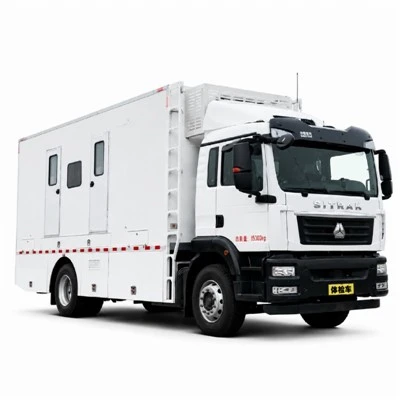
If you run an ambulance service in a cold climate—whether it’s a small rural department in Wyoming or a larger service in Quebec—and you’re looking for a vehicle that will keep up when the temps drop, we’re here to help. We don’t sell one-size-fits-all ambulances; we work with you to spec the right features for your specific climate, your budget, and your community. Reach out to us to start a conversation about what you need for this winter and beyond.
Water Tank Fire Truck REFERENCES
- International Association of Fire Fighters. (2021). Cold Weather Ambulance Operations: A Guide for Emergency Medical Services.
- National Highway Traffic Safety Administration. (2020). Emergency Vehicle Specification for Extreme Climates Report.
- American College of Emergency Physicians. (2019). Guidelines for Prehospital Care in Cold and Frozen Environments.
- Society of Automotive Engineers. (2018). Performance Standards for Ambulance Powertrains in Subzero Temperatures.
- Canadian Medical Association. (2022). Cold Climate Prehospital Patient Warming Protocols and Equipment.
Hubei Ruitu Technology Co., Ltd.
Hubei Ruitu Technology Co., Ltd. is one of the most experienced ambulance manufacturers and suppliers in China, also supports customized service and OEM service. Welcome to buy advanced ambulance made in China here and get pricelist from our factory. Also, 1 year warranty is available.
Address: Xingguang Road, Zengdu District, Suizhou City, Hubei Province
E-mail: Sales@ritumax.com
WebSite: https://www.ruitumotors.com/
