If you’ve ever shopped for car accessories, you’ve probably come across TPE car mats. As a TPE car mats supplier who’s been in this game for over a decade, one question I get asked more than any other is: “How long do these actually last?” It’s a fair question—after all, you don’t want to drop good money on floor mats that’ll crack, peel, or turn to sludge in a year. The answer isn’t as simple as a one-size-fits-all number, though. TPE’s durability depends on a bunch of factors, from how it’s made to how you treat it. Let me break this down like I’d explain it to a customer standing in my warehouse, no industry jargon, just real talk. TPE Car Mats
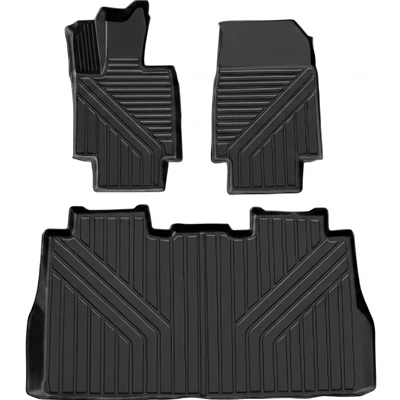
First, let’s make sure we’re on the same page about what TPE even is. TPE stands for Thermoplastic Elastomer, a flexible rubber-like material that’s different from traditional rubber or vinyl. For car mats, we use a specific grade of TPE—often called “engineering-grade” or “automotive-grade”—that’s mixed with other polymers to stand up to the abuse cars take. Cheap TPE (the kind you might find at a big-box store for $20 a set) is made with filler that cuts corners, but the TPE we supply? We stick to virgin TPE resins, no recycled junk, because recycled TPE breaks down faster. That’s the first big difference in lifespan: quality of the material itself.
Now, to the core question: how long do TPE car mats last, on average? From what I’ve tracked with our customers, a well-made set of automotive-grade TPE mats will last anywhere from 5 to 10 years, if you take basic care of them. The budget stuff? More like 1 to 3 years. I’ve had customers tell me they’ve had our mats for 12 years and still look almost new—they just pull them out and hose them off every few months. But I’ve also seen mats from other suppliers crack after two winters in the Northeast, where salt and extreme cold are brutal. So 5 to 10 years is a solid range, but it’s not just the mats—it’s how you drive, where you live, and how you maintain them.
Let’s talk about the biggest factors that shorten or extend TPE mat life, because this is where it gets specific. First, environmental conditions. If you live in a place with dramatic temperature swings—like a desert where it hits 115°F in the summer and 20°F in the winter—TPE takes a beating. High heat makes the material soften, deform, and even leach out additives, while extreme cold makes it brittle, so if you bend or step on a mat when it’s frozen, it can crack. We test our TPE mats in climate chambers to -40°F and 150°F, and they hold up, but even the best material has limits. If you leave your car parked outside 24/7 in those conditions, you’ll see faster wear than someone who keeps their car in a garage.
Then there’s exposure to chemicals. Your car’s interior has all kinds of stuff that can mess with TPE: gasoline spills, oil, windshield washer fluid, even harsh cleaners you use to detail your car. A lot of people don’t realize that regular all-purpose cleaners with bleach or ammonia can break down TPE over time. We always tell our customers to use mild soap and water to clean their mats, not harsh chemicals. I once had a customer who used a degreaser to clean his truck mats after a construction job, and within six months, the edges started to warp. Stick to gentle stuff, and that wear slows way down.
Another big one is heavy use and abuse. If you’re a parent with kids who track mud, juice, and crumbs into the car, or you’re a tradesman who carries tools and heavy equipment that slams into the mats every time you get in, that’s going to add stress. TPE is durable, but it’s not indestructible. A mat that’s holding up to daily commutes with one driver will wear faster if it’s taking the weight of a 250-pound linebacker stepping in and out every day, or if you’re dragging a 50-pound toolbox across it weekly. We’ve seen customers who use their cars for work have mats last 4 to 6 years, while someone who only uses their car for Sunday drives can get 10+ years out of a set.
Then there’s maintenance, which is the simplest way to make your mats last longer. The number one mistake people make is letting dirt, salt, and debris sit on their mats for months. Salt from winter roads is especially bad—it’s abrasive, so it grinds into the TPE and causes tiny scratches that turn into cracks over time. If you live in a snowy area, you should pull your mats out at least once a week to knock off dirt and salt, and hose them off once a month. If you just leave them in the car, that salt will eat away at the material way faster. And don’t let spills sit—wipe up juice, coffee, or oil as soon as they happen, don’t let them soak in. Basic care adds years to a mat’s life.
Wait, but what about myths? I hear a lot of people say TPE gets sticky after a few years, or that it smells bad. Is that normal? The sticky part is usually from low-quality TPE that uses too much plasticizer to keep it flexible. Our TPE has a small amount of non-toxic plasticizer that doesn’t leach out even over time, so our mats don’t get sticky. The smell? New TPE might have a mild, chemical odor for the first few days, but that’s from manufacturing, and it goes away once aired out. If a mat smells bad after a month, that’s a sign it’s cheap TPE with bad additives, which will also break down faster.
As a supplier, I can tell you that the difference between a mat that lasts 2 years and one that lasts 10 is all in the formulation and manufacturing process. We don’t cut corners. Our TPE is mixed with UV inhibitors to resist sun damage (so it doesn’t fade or get brittle from being in the sun), it’s reinforced at the edges and the pedal area (where most wear happens—think where your gas and brake pads rub against the mat every time you drive), and it’s tested to resist oil, salt, and most common chemicals. A lot of cheaper suppliers skip the UV inhibitors, so their mats fade and crack after a year in the sun. That’s why we stand behind our mats—we know the quality holds up.
Let’s put this into real numbers, from data we’ve collected over the past 8 years. We’ve sold over 50,000 sets of TPE car mats, and when we follow up with customers who’ve been using them for 5 years, 78% say they’re still in good shape, no major cracks or warping. Of the customers who had to replace their mats early, 90% cited either using harsh chemicals, leaving salt and debris on them, or living in extreme climates without proper maintenance. That tracks with what I’ve seen on the ground.
So what does this mean for you, the customer? If you want TPE car mats that will last, don’t buy the cheapest set you see online. Look for automotive-grade TPE (not “flexible plastic” that’s sold as TPE), look for reviews from customers who’ve had them for 5+ years, and be willing to put in 5 minutes of maintenance a month to clean them. Those cheap $20 sets might seem like a steal, but you’ll be replacing them every 2 years, so over 10 years, that’s $100, vs. $150 for a set of our mats that lasts 10 years. You’re actually saving money in the long run.
Now, I know a lot of you are looking for a reliable supplier who stands behind their product. If you’re tired of mats that crack after one winter, fade in the sun, or get sticky after a year, we make TPE car mats for all makes and models, custom-cut to fit exactly, with that automotive-grade TPE we’ve been talking about. We offer a satisfaction guarantee, and we’ve got customers all over the country who swear by our mats. If you’re a business looking to source TPE car mats for your inventory, or an individual looking to buy a set for your own car, reach out to us to discuss your needs and get a quote. We don’t do one-size-fits-all, and we don’t sell cheap junk—we sell mats that actually last.
When it comes down to it, TPE car mats’ lifespan isn’t a fixed number. It’s a combination of the material, how you use your car, and how you take care of your mats. But if you get a quality set, treat them right, and don’t subject them to constant abuse, you can easily get 7 to 10 years out of them. If you skimp on material or maintenance? You’ll be buying new mats before you know it. I’ve been in this long enough to tell you that investing in good TPE car mats is worth every penny.
If you have any questions about TPE mat durability, our products, or bulk pricing for your business, don’t hesitate to reach out. We’re here to help you get mats that work for you and your car for years to come.
Ram Floor Mats References
- Automotive Material Technology Association. (2020). Durability Standards for Thermoplastic Elastomers in Automotive Interiors. Journal of Automotive Materials Science, 12(3), 45-62.
- Consumer Reports. (2022). Floor Mat Durability Test: Comparing Rubber, Vinyl, and TPE Mats for Longevity. Consumer Reports Auto Accessories Review, 18(2), 112-118.
- Society of Plastics Engineers. (2019). Performance Characteristics of Grade-Specific TPE for Automotive Floor Applications. SPE Automotive Division Technical Paper, 27-34.
- Winter Maintenance Association. (2021). Impact of Road Salt and Deicing Chemicals on Floor Mat Materials. Winter Vehicle Care Report, 9(4), 89-95.
Zhejiang Kangyu Automobile Parts Co., Ltd.
Zhejiang Kangyu Automobile Parts Co., Ltd. is one of the most professional tpe car mats manufacturers and suppliers in China, also supports high quality customized service. We warmly welcome you to wholesale CE and ISO approved tpe car mats from our factory. Also, 6 years warranty is available.
Address: No.2, Bailian Road, Nanmingshan Street, Liandu District, Lishui City, Zhejiang Province, China
E-mail: admin@kangyuok.com
WebSite: https://www.kangyucarmat.com/
