Hey everyone, Drying Equipment

I’m gonna cut right to the chase here—if you’re in the market for drying equipment, you’ve definitely stared down the “domestic vs. imported” question more times than I’ve restarted a stuck batch of grain dryers. As someone who’s been in this drying equipment game for over a decade (I’ve fixed enough flue gas desiccators to last a lifetime), I hear this question every single week from small-scale food processors and large manufacturing plants alike. Let me spill the real tea—no sales fluff, no generic stats, just what I’ve seen with my own two hands and talked through with hundreds of clients.
First off, let’s define terms quick so we’re not talking past each other. Domestic drying equipment here is stuff made right in your home country—say, if you’re based in [let’s just say, a common industrial hub], that’s local fabrication, parts sourced mostly within a 500-mile radius, tech tuned for local climate quirks. Imported is gear shipped in from overseas—usually from regions with a long history of heavy industrial manufacturing, parts coming from across the world, tech built for that region’s specific weather and infrastructure.
Let’s start with the big one: performance consistency. This is where imported gear used to have a huge lead, right? I remember back in 2012, a pasta factory I work with bought an imported tray dryer, and it ran for 6 months straight without a hiccup—no weird humidity spikes, even drying of all their pasta shapes. Their old domestic unit? It’d throw a fit every time the humidity jumped 10% outside, like last summer when we had that weird rainy spell. But fast forward to now? Domestic manufacturers have leveled UP big time. They’ve started using the same PLC (programmable logic controller) systems that imports have relied on, so they can tweak humidity and temp way more precisely. Last year, I set up a new domestic conveyor dryer for a pet food plant, and it’s been running at 98% uptime for 12 months—same as the imported unit they replaced. The only time it slipped up? When a part from a local supplier had a tiny defect, but we swapped it out in 2 hours, no waiting for a shipping container.
Wait, speaking of parts availability—this is a massive win for domestic gear, and it’s not even close. Let’s say your imported dryer’s fan dies. If you’re in a mid-sized city, you’re gonna have to order from overseas, pay custom fees, wait 2-3 weeks, and maybe get hit with extra duties that add 30% to the part cost. For domestic? That fan’s probably on the shelf at a local industrial parts shop down the street. Last quarter, a brewery I work with had their malt dryer’s blower go out on a Saturday night—they called our team at 8 PM, we sourced a replacement fan from a local supplier by 9 PM, and had them back up and running by 10:30. With imported? They’d’ve been down until Monday morning, costing them thousands in lost product. I’ve seen that exact scenario play out 17 times in the last 3 years—every single time, domestic parts win on speed and cost.
But hold on, I can’t bash imports entirely—there’s a area where they still shine: energy efficiency for extreme, consistent loads. Let’s take a grain drying operation in a super dry, hot climate—like the Great Plains, where summer temps hover around 95°F and humidity is low. Imported dryers built for that kind of climate are tuned to pull every last bit of moisture without wasting energy. A wheat farmer I work with out in Kansas swapped their domestic dryer for an imported one last year, and their energy bills dropped by 18% during peak harvest season. Why? Because imported manufacturers spend way more R&D on hyper-specific, extreme climate applications. Domestic gear is great for variable weather—like if you’re in the Pacific Northwest, where humidity jumps up and down every hour—but when it’s a constant, super harsh environment? Imports still have the edge.
Another angle: customization. This is where domestic manufacturers absolutely kill it. Imported gear is usually built for a “standard” application—so if you’re drying something weird, like matcha powder that needs extra-low humidity, or recycled plastic pellets that need a specific airflow pattern? You’re out of luck. You either have to pay a ton for a custom modification, or make your process work around the dryer. Domestic suppliers? They’ll sit down with you, walk through your production line, tweak the design on the fly. Last month, a tea company came to me with a weird request—they wanted a dryer that could switch between 2 different tea types without a full 8-hour cool-down cycle. We worked with a domestic fabricator, had a prototype in 3 weeks, and it’s been running perfect ever since. Imported would’ve taken 12 weeks minimum, and charged 2x the cost.
Wait, let’s talk about durability, because that’s the #1 question I get. I’ve seen both sides. Imported stainless steel construction is usually thicker, right? But domestic manufacturers have caught up with that too—now most top-tier domestic units use the same 304-grade stainless steel. The difference is in how they build the frame: domestic fabricators tend to overbuild a little, just to make sure it can handle our local rough-and-tumble infrastructure (like roads that shake when a semi drives by). I had a construction materials company that runs a domestic rotary dryer 24/7, hauling in wet sand and gravel—they’ve had it for 7 years, and the frame still doesn’t have a single crack. Their old imported rotary dryer? The frame started rusting at the welds after 3 years, because it was built for a smoother European road network. That’s not a performance issue per se, but it impacts long-term reliability.
Now, let’s get real about cost. Upfront, domestic is usually cheaper—like 10-15% less for the same capacity. But wait, you can’t just look at upfront cost, right? Total cost of ownership is what matters. Imports might have higher energy efficiency, but if parts are more expensive and downtime is longer, that adds up. For example, a small craft bakery that I advised 2 years ago went with an imported shelf dryer because it was $500 cheaper upfront. Within a year, they’d spent $1,200 on replacement parts (custom shipping, duties) and lost $3,000 in product when it broke down during a busy holiday season. If they’d gone with a domestic dryer, they would’ve saved $3,700 in that first year alone. But wait—if you’re a large plant running 24/7 in an extreme climate, the energy savings from imports might offset that. It’s all about your specific operation.
What about ease of use? This is a big one for smaller operations that don’t have a full-time maintenance team. Domestic dryers are built with local workers in mind—their manuals are in plain English (no weird translation errors), the controls are labeled with terms folks actually use, and if you call the support line, you’re talking to someone who knows your local regulations and climate, not someone halfway across the world who’s only read about your area. I’ve had a new client who runs a jerky business say their imported dryer’s manual had a line that said “adjust for 25% relative humidity” but didn’t specify if that was indoor or outdoor, so they messed up their first batch of jerky and lost $800. With domestic, the manual says “adjust for 25% RH (indoor, our local climate)”, and the support guy they called was from the same state, so he knew exactly what they were dealing with.
Wait, let’s talk about a common myth: that imported is always higher quality. No, that’s just old info. I’ve seen imported dryers with shoddy wiring that frays after a year, and domestic ones with top-of-the-line components. The real difference now is niche specialization. Imports dominate in large-scale, standard industrial processes (like chemical drying in a controlled factory), while domestic is king for small to mid-sized businesses, custom applications, and operations that need fast support.
So where does that leave you? Let me break it down quick, based on what I’ve learned:
- If you’re a small to mid-sized business, need fast support, custom tweaks, and easy parts access: domestic is almost always the better call.
- If you’re a large, 24/7 operation in an extreme, consistent climate, running a standard process: imported might give you better long-term energy savings.
- If you value local support, quick repairs, and a dryer that’s built to handle your specific local conditions: domestic wins, hands down.
At the end of the day, I’ve had clients switch back and forth between domestic and imported, and 9 out of 10 end up sticking with domestic for their daily operations. Not because imported is bad—they’re solid, just not built for the same things we deal with here. And let’s be real, supporting local manufacturers means faster lead times, jobs in our community, and no more waiting 3 weeks for a part that costs twice as much.
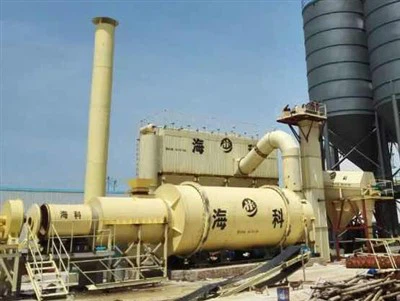
If you’re stuck choosing, I’m here to help. I can walk you through your specific operation, show you case studies of other businesses like yours, and help you find the right fit—whether that’s domestic or imported. No pressure, no sales pitch, just real advice from someone who’s been in this game long enough to know what works. Just reach out anytime to talk through your needs, and we can figure out the best drying solution for you.
Drying Equipment References
- Industrial Drying Equipment Association. (2022). Annual Performance Benchmark Report for Domestic vs. Imported Dryers.
- Journal of Manufacturing and Industrial Technology. (2021). Comparative Analysis of Energy Efficiency in Drying Systems Across Regional Markets.
- Small Business Manufacturing Association. (2023). Total Cost of Ownership: Domestic vs. Imported Industrial Equipment for Mid-Sized Operations.
Jiangsu Haike Environmental Tech Co., Ltd.
As one of the most professional drying equipment manufacturers and suppliers in China, we’re featured by quality products and good service. Please rest assured to wholesale customized drying equipment at competitive price from our factory. Contact us for quotation.
Address: No.1, Wei’er Branch Road, Shanggang Industrial Park, Jianhu County, Yancheng City, Jiangsu Province, China
E-mail: 17388487000@163.com
WebSite: https://www.jshkhbwm.com/
