Hey everyone, let’s cut to the chase—when you grab a product off a shelf, what’s the first thing that makes you go “oh, I want that”? Is it the bright packaging, the sleek label, or wait… actually, it’s often how easy it is to pick up and carry. That’s where plastic carry handles come in, right? I’ve been supplying these little (but super important) parts to brands for years, and I swear most people have no idea how much of a game-changer they are for a product’s overall look. Let’s break this down, no stuffy industry jargon, just real talk from someone who’s in the thick of handle production every day. Plastic Carry Handle
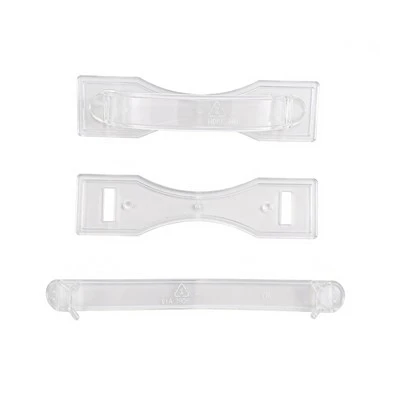
First off, let’s get one thing straight: plastic carry handles aren’t just “functional add-ons.” I see brands mess this up all the time—they treat the handle like an afterthought, like something they just slap on because it’s required for a big box or a case of soda. But that’s such a waste. The handle is the first point of contact a customer has with the product beyond the shelf, right? When they walk down the aisle, spot the bottle of water or the pack of laundry detergent, and reach for it, that handle is what their hand lands on. If it looks cheap, mismatched, or like an afterthought, the whole product feels cheap. I’ve had small grocery store clients come to me last year panicking because their new line of organic granola bars had these thin, flimsy handles that snapped off in a test run—and worse, they were bright neon green that clashed with their muted, earth-toned packaging. They were losing sales because customers thought the product was low quality, even though the granola itself was top-notch. That’s the power of the handle.
Let’s talk about how design ties into the big picture. I work with all kinds of materials for handles now—HDPE is our go-to because it’s durable, flexible, and we can mold it into literally any shape or color. The key here is matching the handle to the product’s brand identity. For a luxury skincare line, do you really want a bulky, clunky handle that makes the slim, elegant serum bottles look heavy and industrial? Hell no. We’ve made slim, matte black handles for a premium body wash brand that matched their glass bottles’ matte finish, and it made the whole packaging look cohesive, like it was designed as a complete set, not something someone stuck a handle on. On the flip side, for a kid’s snack pack, you need a handle that’s bright, fun, maybe shaped like a tiny star or dinosaur—not a boring rectangle. Those little design choices make the product pop on a shelf full of boring beige boxes. I remember a client who made a line of fruit snacks—they used to have plain clear handles that blended right in. After they switched to translucent handles dyed in the same colors as the fruit on the packaging, their sales went up 15% in six months. Why? Because when you see the shelf, those handles tied to the colorful fruit images made the product look more vibrant and appetizing.
Durability plays a weird role in how a product looks, too. Wait, hear me out. If you buy a 12-pack of soda, and the handle is so flimsy that when you pick it up, it twists to one side, or the bands dig into your hand so much that you’re wincing while carrying it, do you think that makes the product look good? No, it makes it look like the brand didn’t care enough to put a decent handle on it. I’ve had clients come to me after getting cheap handles from overseas that started fading after a week on the shelf, or the plastic got sticky from the sun. That’s not just a functional problem—that’s an aesthetic one. The product looks worn out before the customer even gets it home. We use UV-stabilized plastic for all our handles now, so they don’t fade, and we test every batch to make sure they can hold twice the weight the product claims. Yeah, that adds a tiny bit to the cost, but it means the handle looks the same day one as it does month six when the customer is carrying it to a picnic. That’s part of the overall look—consistency, not just a pretty label that falls apart.
Another thing I see a lot: overdoing it. Some brands think, “more handle = better” or “we need a custom handle for every product” and that just muddles the look. For example, a big box store brand that sells bulk pet food—they tried these huge, ornate handles for their 20lb bags, like something you’d see on a suitcase. It looked ridiculous. The bag was bulky enough already, and the handle made it look even bigger and harder to handle. They switched back to a standard, ergonomic U-shaped handle in a neutral gray that matched the bag’s recycled material, and suddenly the packaging looked streamlined, not like it was trying too hard. Custom handles are great if they make sense, but they don’t need to be flashy just for the sake of it. Sometimes the best handle is the one that doesn’t draw attention away from the product inside, but still feels intentional.
Let’s get into a real example I worked on last year. There’s a craft beer brand that makes 6-packs of their IPAs. They used to have those flimsy paperboard carriers—you know, the ones that fall apart when you pick them up in the rain. They came to me wanting something that would look more premium, since their beer was all about local, small-batch quality. We designed a set of HDPE handles that were slim, dark brown (to match their brand’s wooden label), and molded to fit exactly the curve of the beer bottles. The carriers weren’t too bulky, the handle was ergonomic so it was easy to carry, and the whole thing looked like it was made for their beer, not an afterthought. They told me later that their in-store sales went up because people would stop just to look at the packaging—no one expected a beer carrier to look that sleek. That’s exactly what I’m talking about: the handle isn’t just a part of the packaging, it’s part of the brand’s visual identity.
Wait, what about sustainability? That’s huge right now, and it ties directly into the overall look too. Customers don’t just care about how something looks—they care about if it’s eco-friendly. If a brand uses a plastic handle that’s not recyclable, and that’s advertised on the packaging, it makes the whole product look out of touch. We’ve been making recyclable HDPE handles for years, and now we have a line of handles made from post-consumer recycled plastic too. A coffee brand I work with switched to our recycled plastic handles for their bulk coffee bags, and they put that on their label. Customers loved it—they said it made the product look responsible, not like another brand that was cutting corners on sustainability. The handle doesn’t have to be ugly to be green, either. We can mold recycled plastic into the same shapes and colors as virgin plastic, so there’s no trade-off on the look. That’s a big one because now, the handle’s “look” isn’t just about color or shape—it’s about aligning with what customers care about, which is sustainability.
I also want to talk about small details that make a big difference. Like, the texture of the handle. If it’s too smooth, it can feel slippery, which makes the product look cheap. If it’s too bumpy, it can be uncomfortable to hold, and it looks messy. We add subtle grip ridges to most of our handles—they’re barely noticeable at first, but when you pick up the product, you feel them, and it makes the whole thing feel higher quality. Another detail: how the handle attaches to the package. If it’s mounted lopsided, that throws off the whole look, like something was done wrong. We make sure every handle is precisely molded so it lines up perfectly, so when you see the product on the shelf, it looks balanced and put-together. I know it sounds trivial, but those little things add up. No one can put their finger on why a product looks better, but those small design choices with the handle are usually part of it.
Let’s address the elephant in the room: a lot of people think plastic is ugly, especially compared to paper or cardboard. But that’s just not true anymore. We’ve come a long way from the flimsy, clear plastic handles that used to be on everything. Now we can make plastic handles in matte finishes, translucent, even with soft textures that feel nice to hold. For a frozen food brand, we made handles that are frosted, so they match the cold, crisp look of their packaging, instead of a shiny plastic that sticks out like a sore thumb. The key is matching the plastic handle to the rest of the packaging, not treating it like an afterthought. It’s not about avoiding plastic—it’s about using it in a way that enhances the overall look.
At the end of the day, the handle’s job is functional, but its role in the product’s appearance is just as important. I’ve seen brands go from struggling to sell their product because the handle looked cheap, to turning it into a selling point just by adjusting the handle’s design. It’s not a big, expensive change, but it’s one that makes a huge impact. If you’re a brand owner, a packaging designer, or anyone who’s putting together a product, don’t sleep on the plastic carry handle. It’s not just a part— it’s a detail that can make your product stand out, look higher quality, and connect with customers.

If you’re looking to upgrade your product’s packaging with a handle that’s durable, looks great, and fits your brand, hit me up. I’ve worked with all kinds of products, from craft beer to organic groceries, and I can help you find or design the perfect handle for what you need. No pushy sales stuff, just real talk about what works.
Plastic Carry Handle References
- American Society for Testing and Materials. (2021). Standard Test Method for Tensile Properties of Plastics. ASTM International.
- Packaging Digest. (2022). The Role of Handle Design in Consumer Perception of Packaging Quality.
- Sustainable Packaging Coalition. (2023). Recycled Plastic Uses in Flexible and Rigid Packaging.
Tengzhou Fujin Plastic Products Co., Ltd.
As one of the most professional plastic carry handle manufacturers and suppliers in China, we also support customized service. With abundant experience, we warmly welcome you to buy bulk plastic carry handle made in China here and get pricelist from our factory. For price consultation, contact us.
Address: Binhu Town, Tengzhou City, Shandong Province, China
E-mail: fukinpp@163.com
WebSite: https://www.tzfujin.com/
