Hey there, let’s cut the crap if you’re running high pressure piston compressors—you already know garbage air intake kills your equipment fast, makes your end product suck, and costs you way more in downtime than just getting this right. I’ve been selling these bad boys for over 12 years, so I’ve seen every single mistake people make when setting up their intakes, from the small shop on the side of a highway to the big manufacturing plant with 5 compressors running 24/7. Today, we’re talking about how to make sure your intake air is clean enough to keep your compressors humming, your parts from wearing out too soon, and your output actually usable. No boring engineer jargon, just real talk from a guy who’s had to fix a whole bunch of these messes. High Pressure Piston Compressors
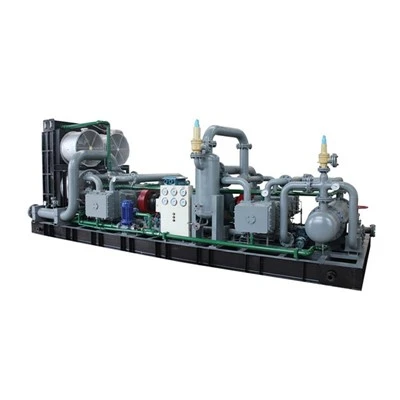
First off, let’s get one thing straight: high pressure piston compressors aren’t your standard shop air units. These bad boys compress air to like 100–5000 PSI (sometimes even higher for specialty uses), so whatever’s in that intake air gets concentrated right along with the pressure. A speck of dust the size of a grain of sand might not even phase a regular compressor, but in a high pressure setup? It’s like pouring grit into an engine and cranking it up to max. I’ve seen a customer’s compressor seize up in 3 months because they stuck the intake right by their loading dock, where they’re moving metal parts all day—metal shavings got sucked in, chewed up the pistons and cylinders, and they ended up paying 2x for a new unit plus downtime. So location isn’t just a “nice to have”—it’s non-negotiable.
Let’s break location down first, because most people skip this part and pay for it later. Where you put your intake port matters more than the filter you slap on it, honestly. If you can, don’t mount it near exhaust vents (of any kind—factory exhaust, truck exhaust, even the building’s HVAC exhaust), don’t put it down low where dust and debris settle (we’re talking at least 6 feet off the ground, higher if you’re in a dusty area), and never, ever put it near a loading dock, dumpster, or any area where stuff’s getting kicked up. I had another customer who mounted their intake on the side of a warehouse that faced a construction site—they thought a 100-foot gap would be enough. Nope, concrete dust blew right over, and within 6 months their intercoolers were completely clogged, so the compressor had to work twice as hard to make pressure. If you can’t move the intake away from those spots? Add a wind screen or a baffle to keep heavy debris out, but don’t rely on that alone.
Next up, sizing and designing the intake piping. A lot of guys think, “More pipe = more air, right?” Wrong. If your intake pipe is too narrow, it creates suction that pulls more dirt and debris in, and it restricts air flow so much that your compressor has to work harder than it should. For high pressure piston compressors, the intake pipe should be at least the same size as the compressor’s manufacturer-recommended intake port—don’t try to save money by going smaller. Also, avoid unnecessary bends in the pipe, and if you have to bend it, make sure it’s a wide radius bend (at least 3x the pipe diameter) so air flows smoothly without creating turbulence that stirs up junk. I’ve seen guys use 90-degree elbows like they’re going out of style, and guess what? Those turbulence spots trap dirt, and eventually that dirt gets pulled into the compressor. Another pro tip: add a rain cap or a bird screen to the end of the intake pipe. I know it sounds silly, but birds, bugs, and rainwater can get in there, and rainwater in a high pressure compressor is a disaster—water causes corrosion, washes away lubrication, and can even cause hydraulic lock if enough of it gets in. Yeah, that’s a thing. Hydraulic lock means the piston can’t move because water isn’t compressible, so you bend a rod or blow a seal. Not fun.
Now we get to the filters, and this is where 90% of people mess up. They buy the cheapest filter they can find, slap it on, and forget about it. No, no, no—for high pressure piston compressors, you don’t skimp on filters. Let’s categorize them because there’s different types for different levels of crud. First, the primary intake filter—this is the big one that catches the coarse stuff: dust, dirt, leaves, bugs, large debris. For most standard industrial setups, a pleated paper or synthetic primary filter is fine, but if you’re in a super dusty environment (like a mine, construction site, or lumber yard), go with a reusable washable foam primary filter. Those are way more durable and cheaper in the long run than buying new paper filters every month. But here’s the thing: primary filters only do so much. They stop big stuff, but they let tiny particles through—particles smaller than 5 microns, even. For high pressure compressors, those tiny particles are the real killers. They get past the primary filter, get compressed, and act like sandpaper on the piston rings, cylinder walls, and valves, which are precision-machined parts. Once those get worn, your compressor loses efficiency, uses more electricity, and needs repairs way more often.
So that means you need a secondary filter, right? A coalescing filter, usually. Coalescing filters are made to catch oil mist, water vapor, and those tiny solid particles that get past the primary filter. For high pressure applications, you want a coalescing filter rated for at least 99.9% efficiency on particles 0.1 microns and smaller—don’t go cheaper than that. I’ve had customers tell me their “cheap” secondary filter was working, only to send me their old compressor parts and show me the tiny scratches on the cylinder walls that came from particles the cheap filter missed. Another thing about filters: you have to replace or service them on a schedule. I can’t tell you how many guys wait until their compressor starts acting up to change filters. But by then, the damage is already done. Most manufacturers recommend checking primary filters every 1–3 months, depending on how dirty your environment is, and secondary filters every 6–12 months. If you see a big drop in pressure or air flow before that, check the filter—chances it’s clogged. And don’t forget to check the pre-filter on the coalescing filter too, because that’s the first line of defense for the secondary filter. A clogged pre-filter will make the coalescing filter work too hard, and it’ll fail faster.
Wait, there’s another part I almost forgot: the intake air drying system? No, not exactly, but a moisture separator. Even if you have good filters, if your intake air has a lot of moisture (like in a humid climate, or near a body of water), that moisture can cause problems. High pressure compressors compress air, so moisture turns to liquid, which can lead to corrosion in the cylinders and piping, and if it gets into your end product, that’s a whole other headache. So adding a centrifugal moisture separator right after the intake filter setup will catch most of the liquid water before it gets into the compressor. That’s a cheap add-on, like $100–$300, and it saves you thousands in repairs from rusted parts.
Also, let’s talk about regular maintenance checks, not just changing filters. Once a month, climb up to the intake port and take a look. Check the intake pipe for dents or cracks that might let unfiltered air in (yeah, that can happen—if a pipe gets damaged, dirt can get in through the crack even if the filter’s good). Check the rain cap and bird screen for clogs from leaves or bugs. If you have a washable foam primary filter, wash it with mild soap and water every month, let it dry completely, and re-oil it lightly—don’t skip the re-oil, because that’s what makes it catch tiny particles better than just dry foam. I had a customer who washed his foam filter and forgot to oil it, and he came back a month later saying his compressor was running worse—turns out the dry foam didn’t catch anything, so all the dust was going in. Oops.
Wait, let’s get real with a common scenario. Let’s say you have a high pressure piston compressor that runs 8 hours a day, 5 days a week, in a warehouse that’s not super dusty but is in a humid area. Here’s the setup I’d recommend: mount the intake 8 feet off the ground, away from the building’s exhaust vents and the loading dock, with a wide-radius bend pipe leading to the compressor, a bird screen and rain cap on the end. Primary filter: washable foam, so it’s durable. Secondary filter: 0.1 micron coalescing filter, rated for high pressure (not all coalescing filters are made for over 1000 PSI, so check that). Add a centrifugal moisture separator between the intake pipe and the first stage of the compressor. Schedule a check every month for the first 3 months to make sure everything’s working, then every 3 months after that, plus filter service on schedule. That setup will make your compressor last 2–3 times longer than if you just slapped a cheap disposable filter on and forgot it.
I know some guys are gonna say, “That sounds like a lot of work, I don’t have time for that.” But let’s do the math. A new high pressure piston compressor costs $10,000–$50,000, depending on size. Repairs can run $2,000–$10,000, and downtime can cost you hundreds or thousands of dollars an hour if you can’t run your operation. Spending $500–$1,000 a year on filters, separators, and maintenance is way cheaper than replacing a compressor or fixing a seized piston.
Another mistake I see: people mixing up filters for regular compressors with high pressure ones. Regular shop air filters are fine for low pressure, but they can’t handle the concentration of contaminants in high pressure air. A 1 micron particle in regular air becomes a 100 micron particle when you compress to 100 PSI, and a 500 micron particle at 5000 PSI. That’s like a tiny rock by the time it gets to the piston. So using the right filter, rated for your compressor’s max pressure, is non-negotiable. Don’t cut corners here.
Wait, what if you’re in a super dirty area, like a mining operation or a sawmill? Then you might need a two-stage primary filter, or even a HEPA filter for the intake. Yeah, HEPA rated intake filters are a thing, and they’re worth it for those environments. I had a sawmill customer a few years back, he was dealing with so much sawdust that his standard foam filter was getting clogged in a week. We added a pre-filter that’s a heavy-duty synthetic media, then the foam primary, then the coalescing secondary. His filter change interval went from 1 week to 6 weeks, and his compressor’s wear rate dropped by 40%. That’s a win.
Let’s also talk about air quality testing. If you’re not sure if your intake is actually clean enough, you can send a sample of the air going into your compressor to a testing lab. They’ll tell you how many particles are in there, the size, and if there’s moisture or oil. That’s a good step if you’re setting up a new compressor and want to make sure you got the setup right. It costs a couple hundred bucks, but it’s way better than finding out 6 months later that you messed up.
At the end of the day, clean intake air isn’t a “nice to have”—it’s the foundation of your high pressure piston compressor working well. You spent good money on that equipment, don’t let a dirty intake ruin it. I’ve been in this game long enough to know that 90% of compressor issues come from poor intake air quality, not the compressor itself being bad.

If you’re dealing with a compressor that’s breaking down too often, or you’re setting up a new high pressure piston compressor and want to get the intake right, hit us up for a chat. We don’t do pushy sales stuff, we just give real advice based on what works, and we can help you pick the right filters and setup for your specific operation. No cookie-cutter solutions, because every shop, every job site, every factory is different.
Screw Gas Compressor References:
- Compressed Air Gas Institute. "Intake Air Quality Requirements for Reciprocating Compressors." 2022.
- P.R. Jones. "Maintenance Best Practices for High Pressure Piston Compressors." Industrial Maintenance Magazine, vol. 47, no. 3, 2021, pp. 18–22.
- OSHA. "Compressed Air Safety Guidelines for Industrial Operations." 2023.
- Air Filter Manufacturers Association. "Filter Selection Guidelines for High Pressure Compressor Intakes." 2020.
Shanghai Sollant Energy Saving Technology Co., Ltd.
As one of the most professional high pressure piston compressors manufacturers and suppliers in China, we’re featured by quality products and good service. Please rest assured to buy bulk durable high pressure piston compressors from our factory. Welcome to view our website for more information.
Address: No.215, Songri Center, Beihongqiao, Jiading District, Shanghai, China.
E-mail: info3@sollant.com
WebSite: https://www.sollant-gas.com/
