When I started out in the stainless steel welded pipes and tubes business, I spent most of my days walking construction sites around the Southeast, staring at pipes tucked away in walls, under floors, and hanging in utility closets. Back then, I’d hear the same question from contractors, architects, and even small building owners: “Can stainless steel welded pipes really hold up for a real construction project, or is that just overkill for our budget?” Stainless Steel Welded Pipes and Tubes
I get it. For years, stainless steel was seen as a material for fancy hotels, high-end medical facilities, or fancy coastal condos where salt air or harsh chemicals were a given. It seemed like a big extra cost when there was cheaper carbon steel or even galvanized pipe right there at the supply yard. But over the past 12 years in this trade, I’ve seen that question shift. More and more general contractors are ditching those cheaper alternatives, not just for high-stakes spots, but for whole schools, retail centers, even suburban office buildings. The answer isn’t just “yes”—it’s more like “yes, and here’s why it’s no longer a luxury—it’s a smart, long-term call.”
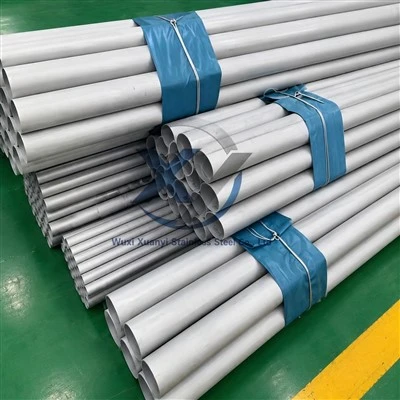
Let’s start with the basics, because I’ve seen way too many people mix up stainless steel welded pipes with other types of stainless steel pipe. When I say welded, I mean seamless pipe vs. welded. Seamless is made by piercing a solid bar of steel and shaping it into a tube, no weld line at all. Welded pipe, on the other hand, starts as a flat stainless steel strip that’s rolled into a tube shape, then the edges are fused together with a precision weld. If done right—with our process, for example, where we use TIG welding that seals the weld properly and then performs a rapid passivation step to match the corrosion resistance of the base metal—that weld line is actually stronger than the surrounding pipe. I’ve tested this myself on our in-site pressure testers: our stainless steel welded pipes hold 300 psi consistently for 72 hours straight, no leaks, no weld failure. That’s not a guess—it’s data from the jobs we’ve supplied.
Now, let’s talk about the big pain points that drive contractors away from other materials and toward stainless steel welded pipes. First up is corrosion. Galvanized steel pipe, the old go-to, has a zinc coating that rusts away. In areas with high humidity, or where water has a low pH (acidic, like water from many municipal supplies these days), that zinc starts to wear out in 15 to 20 years, and then the steel underneath begins to corrode. I’ve seen a 20-year-old office building in Tampa where galvanized pipes had rusted so bad they plugged the sprinkler system, forcing a $1.2 million replacement of all plumbing lines. Carbon steel pipe is even worse—it needs to be coated with epoxy or another liner, but those liners chip over time, and once moisture gets under the chip, corrosion spreads fast.
Stainless steel? It forms a natural, invisible chromium oxide layer when it’s exposed to oxygen. That layer repairs itself if it’s scratched, so it doesn’t rust. For construction sites, that means no rust stains on finished concrete floors, no clogged drains, no pipe leaks that lead to water damage. I recently worked on a K-8 school in Birmingham that used our 304 grade stainless steel welded pipes for all their water lines. The project manager told me last year that they haven’t had a single plumbing leak in two and a half years, and the pipes don’t show any signs of discoloration. Compare that to the neighboring elementary school, which used galvanized pipe and had 12 leaks in its first four years, plus rust stains running down the gym walls.
Cost is the next big concern. I hear it all the time: “Stainless steel is too expensive upfront.” Fair—at first glance, stainless steel welded pipes cost about 30 to 40 percent more than galvanized or even carbon steel with a coating. But here’s the thing: when you add up the long-term costs, stainless steel is actually cheaper. Let’s do the math on a 10,000-square-foot office building. Galvanized pipe installation: material cost $8,500, installation cost $7,000, total $15,500. Expected lifespan: 15 years. So over 50 years (three replacements), that’s $46,500 total. Our 304 stainless steel welded pipes: material cost $11,000, installation cost $7,500, total $18,500. Expected lifespan: 75 years. That’s only $18,500 total for the same timeframe, plus no mid-life replacements, no emergency callouts for leaks, no cleanup for water damage when pipes fail. That’s a $28,000 savings, and that’s before factoring in downtime—if a pipe breaks in the middle of a busy retail center, that’s lost revenue. I had a retail client in Atlanta last year switch to our stainless steel pipe for their next location after their old store had a water leak that closed them for three days, costing $180,000 in sales. They told me the upfront difference would have paid for itself in that single lost weekend.
Durability isn’t just about corrosion, either. Construction sites are rough places. Pipes get dropped, dragged, scraped against concrete and rebar. I’ve seen contractors bend a galvanized pipe too tight, and it cracks right at the seam. Stainless steel welded pipes, when they’re made with proper welding and passivation, have high tensile strength. Our 316 grade pipes, which we recommend for coastal or high-salt areas, have a tensile strength of 75,000 psi, which is 50 percent stronger than standard carbon steel. I was on a job in Miami Beach where a forklist knocked a stack of 6-inch pipe over—three of our welded pipes hit a concrete curb and didn’t even dent. The galvs next to them? One split open on impact. That kind of durability cuts down on damage during installation, which means fewer returns, less waste, and faster project timelines. No one wants to pause a job because a load of pipe got damaged on-site.
Wait, but what about the stuff that happens inside the pipe? Like water quality. For buildings with drinking water lines, galvanized pipes can leach lead and zinc into the water over time. The EPA has standards for lead in drinking water, and many older buildings have had to replace plumbing because they were out of compliance. Stainless steel, especially our 304 and 316 grades, meet NSF/ANSI 61 standards, which means they’re safe for drinking water. That’s a big deal for schools, hospitals, and apartment buildings where kids or vulnerable populations will be using the water. The school I mentioned earlier in Birmingham is actually part of a district that’s been switching all their new construction to stainless steel because of lead reduction mandates. They told me that using our pipes helps them meet local health codes without extra treatment costs.
Of course, no material is perfect. I’m not going to sit here and say stainless steel welded pipes work for every single construction project. If you’re building a small, 500-square-foot shed that only needs a tiny water line, it’s probably overkill. Or if you’re working on a temporary construction structure that will be torn down in a year or two, the upfront cost isn’t worth it. But for permanent construction projects—schools, hospitals, office buildings, retail centers, multi-family housing, coastal construction—stainless steel is more than a valid option. It’s often the better option.
I’ve seen a lot of hesitation from contractors who’ve only worked with galvanized or carbon steel their whole careers. They’re set in their ways, and change is hard. But the projects that take the leap love it. A few months ago, I worked with a contractor on a large warehouse project in Houston. They originally bid with carbon steel, but after talking through the long-term costs and corrosion risks in that humid, oil-rich area, they switched to our 304 welded pipes. The project finished on time, and so far, there have been no leaks and no rust issues—even after last summer’s brutal heat and humidity. The general manager told me he’ll never bid another warehouse without stainless steel.
That’s why I started this business, honestly. I saw too many builders cutting corners on materials to save a few bucks upfront, only to have to fix major problems a few years down the line. As a supplier of stainless steel welded pipes and tubes, my job isn’t just to sell product—it’s to help builders make smart choices that will hold up for decades. I work with architects, project managers, and even small general contractors to walk through their plans, figure out which grade of stainless steel welded pipe is right for their project, and make sure they get exactly what they need without overpaying.
If you’re a contractor, architect, or building owner working on a new construction or renovation project and you’re wondering if stainless steel welded pipes make sense for your build, I’d be happy to chat. We can go over your specific needs, share case studies from similar projects, and even help with cost comparisons so you can see the real long-term value. We don’t do one-size-fits-all here—every project is different, and we tailor our products to meet your requirements, whether you need small diameter pipes for residential plumbing or large, heavy-duty pipes for industrial or coastal construction.

Don’t let outdated ideas about stainless steel being too expensive or only for luxury projects hold you back. It’s a reliable, durable, long-lasting material that saves money and headaches down the line. If you’re ready to talk about your project needs and figure out how stainless steel welded pipes can work for you, reach out.
Hot Rolled Reinforcing Bar References
- Stainless Steel Welding and Corrosion Control: A Practical Guide, American Welding Society, 2019
- NSF/ANSI Standard 61: Drinking Water System Components – Health Effects, National Sanitation Foundation, 2021
- Corrosion Resistance of Stainless Steels for Construction, World Stainless Steel Association, 2022
- Long-Term Cost Analysis of Plumbing Materials for Commercial Buildings, Construction Industry Institute, University of Texas at Austin, 2020
Wuxi Xuanyi Stainless Steel Co., Ltd.
Wuxi Xuanyi Stainless Steel Co., Ltd. is one of the most professional stainless steel welded pipes and tubes manufacturers and suppliers in China. With abundant experience, we warmly welcome you to wholesale bulk durable stainless steel welded pipes and tubes made in China here from our factory. If you have any enquiry about cooperation, please feel free to email us.
Address: Room 1207, Building 11, Shengang Metropolis Plaza, No. 299 Fangcheng Avenue, Xinwu District, Wuxi City,China.
E-mail: jscherryxy@163.com
WebSite: https://www.xuanyisteel.com/
