Hey there, fellow automation folks! If you’ve ever spent time around industrial belt guide rail drive modules—let’s be real, you know the pain when movement gets jittery. One minute your production line’s humming along like a well-oiled machine, the next that module’s stuttering, skipping steps, or making weird noises that make you reach for your earplugs. As a supplier of these things, I’ve gotten more late-night calls from shop floor managers than I can count, all asking the same question: “How do I get this thing moving smooth as butter again?” Industrial Belt Guide Rail Drive Module

Look, I don’t do jargon just to sound smart. Most of you aren’t engineers in a ivory tower—you’re the ones dealing with dust, temperature swings, constant load changes, and parts that break down when you least expect them. So let’s cut the crap, no fancy textbook terms here, just real, actionable stuff I’ve seen work on hundreds of modules. Let’s dive in.
First off, let’s talk basics: most people skip the pre-install check, and that’s where the trouble starts. I’ve had guys call me up saying their new module is already jittery, and when I ask if they aligned the rails properly, they go “Uh… what alignment?” Dude, if the guide rails aren’t dead straight (wait, “dead straight” is probably a phrase, but I mean no more than 0.05mm deviation over a meter, if we’re being specific), the belt’s fighting itself the second it turns on. Think of it like putting on a pair of shoes that’s half a size too small—you’re gonna stumble every step. I always tell my clients: grab a dial indicator, not a level. Levels lie on sloped shop floors. Dial indicators will show you every tiny dip or bend you can’t see with the naked eye. And don’t just check once—check the rail from end to end, at multiple points, even if you had it installed by a “pro.” I’ve seen supposed pros mess this up so bad, the module was working against a 10kg extra load before it even moved an inch. That’s not the module’s fault—that’s installation 101.
Next up, belt tension. This is the big one. Too tight, and you’re putting unnecessary stress on the bearings, the motor, the whole thing—you’ll burn out parts in weeks. Too loose, and the belt slips, skips, and makes that god-awful slapping noise. I see this mistake all the time: guys crank the tensioner until they can’t move the belt with two hands, and that’s it. Wrong. The right way? If you’ve got a timing belt, use a tension gauge—shoot for about 20-30N per 10mm of belt width. If you don’t have a gauge, here’s a quick trick I learned from a veteran line worker: push the belt halfway between the two pulleys with your thumb. It should deflect about 1mm for every 100mm of distance between the pulleys. That’s it. Not more, not less. And one thing people forget: tension changes as the module runs. The belt stretches over time, so check that tension every month, not just when you install it. I had a client who skipped this, and his module started stuttering so bad he had to shut down a $10k production run. Oops.
Now, lubrication. Again, another thing people get wrong. Either they use way too much grease (it gunked up, collects dust, and acts like sandpaper) or they use the wrong stuff. Wait—industrial guide rails and belts don’t need that super expensive synthetic lubricant unless you’re in a food-grade environment. For most standard modules, a good lithium-based grease or a light synthetic oil works, but only if you apply it correctly. And here’s the rule: less is more. If you’re greasing the linear rail, apply a thin film along the entire rail, not just a blob in the middle. Wipe off any excess right away—excess grease is just dust magnet. For belts, if it’s a timing belt, don’t douse it with oil (that’ll break down the rubber). Use a dry lubricant, like Teflon spray, every couple months, unless the manufacturer says otherwise. And never use household oil—3-in-1 or WD-40 is for bikes, not industrial stuff. I’ve seen someone use WD-40 on a module once, and within a week, the belt was slipping so bad it fell off the pulleys. Disaster.
Wait, what about the bearings? If your module has ball bearings in the pulleys or the carriage, those are the quiet workhorses, but they hate dirt and moisture. If your shop floor is dusty (and let’s be real, most are), you need proper seals. A lot of cheaper modules come with open bearings—those are fine for clean labs, not for a metal stamping shop. I always recommend upgrading to sealed bearings if your module’s gonna be in a dirty environment. Sealed bearings keep dust and grime out, so they spin smooth, not rough. And even sealed bearings need a little lubrication every six months—they don’t last forever. If you start hearing a high-pitched whine from the pulley, that’s the bearing screaming for help. Don’t wait till it locks up—replace or lubricate it then.
Another thing: load distribution. A lot of people put the heaviest load all on one side of the carriage, and that throws everything off. The module’s designed to carry a specific max load, evenly distributed. If you’ve got 50kg sitting on the left end of the carriage, the rail on the left is gonna wear faster, the belt’s gonna pull harder on that side, and movement gets uneven. I’ve had clients tell me “my module only has 30kg on it, why’s it jittery?” Turns out they had a 20kg part on one end and nothing on the other—total load was 20kg, but distribution was all wrong. Spread that load out, guys. Evenly. It’s not rocket science, but it’s super easy to miss.
Temperature and environment too. If your shop is freezing (like a cold storage warehouse) or burning hot (like a metal fabrication shop), that affects both the belt and the rails. Rubber belts get stiff in the cold, making movement jerky. Metal rails expand in the heat, so tension that was right at room temp is way too tight when it’s 40 degrees out. I’ve got clients in both cold and hot climates, and the fix is simple: adjust tension with temperature, or use belts made for extreme temps. There are specialty belts out there that stay flexible in the cold, or resist stretching in heat. Don’t just use a standard belt for every job—match the part to the environment. That’s a no-brainer, but you’d be surprised how many people don’t do that.
Wait, what about alignment of the motor and the gearbox? If the motor shaft isn’t perfectly aligned with the drive pulley shaft, you’re putting sideways stress on the belt, which makes it rub against the rail, wear out faster, and move unevenly. A lot of installers just “eye it” and call it good. No. Use a laser alignment tool—if you don’t have one, a straight edge and a feeler gauge works. The gap between the shafts should be less than 0.1mm. If it’s more than that, you’re fighting friction every time the motor turns. That’s another thing that causes jittery movement, even if everything else is set up right.
Oh, and don’t forget to check for worn parts over time. Even if you do everything right, belts stretch, rails wear, bearings get rough. I tell my clients: do a monthly check of the belt for cracks or fraying, the rail for any flat spots or rust, and the carriage wheels (if your module has them) for wear. If you see a fray in the belt, replace it before it snaps mid-shift. A flat spot on the rail? That’s gonna make the carriage bump every time it passes that spot, and over time, that bump gets worse. I’ve had a client who waited six months to replace a slightly worn rail, and by then, he had to replace the whole module because the rail was so damaged the belt was slipping constantly. Spend $50 on a rail instead of $5k on a new module—simple.
Let me tell you a quick story that sums this all up. Last year, I had a client in a packaging plant calling me nonstop, saying their module was shutting down lines every other day. He’d tried new belts, new lubrication, even called in a “specialist” who charged him $2k for nothing. When I showed up, the first thing I did was check rail alignment—turns out, the installers had tightened the bolts too much, bending the rail by 0.08mm over the 2-meter length. Then the belt was way too tight, because they’d used a level instead of a dial indicator, so tension was double what it should be. Then, the bearings were open, so there was a fine layer of metal dust in them, making them rough. We fixed all that, adjusted tension, sealed the bearings, aligned the rail, and that module ran for 8 months straight without a single issue. He told me that saved him over $100k in lost production that year.
Look, I get it—you’re busy. You’ve got lines to run, orders to fill, you don’t have time to mess around with tiny adjustments. But these little things make the difference between a module that moves smooth and one that’s a pain in your side. And if you’re buying new modules, don’t skimp on parts. Cheaper modules with open bearings, generic belts, and aluminum rails that bend easily will cost you way more in the long run. I build my modules with sealed bearings, precision-ground rails, and belts made for consistent load, because I don’t want my clients dealing with the same headaches I’ve seen over and over.
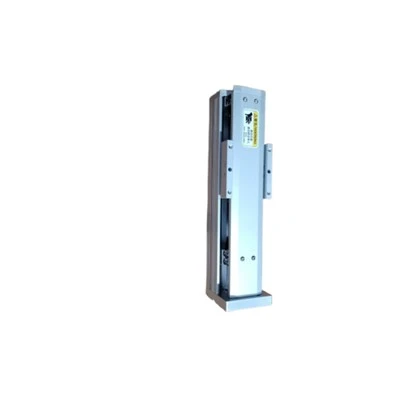
If your module’s still acting up after trying these steps—if you’ve checked alignment, tension, lubrication, load distribution, all that—maybe it’s time to look at the module itself. Maybe it’s not the setup, maybe it’s a part that’s worn, or something that wasn’t built right. I’m not here to sell you something you don’t need, but if you’re tired of dealing with jittery movement and lost production, let’s chat. I can help you troubleshoot, whether it’s tweaking your existing setup or finding a module that fits your needs. No pressure, just real advice from someone who’s been in this game for years, talking to shop floor guys like you.
Automotive Relay Production Line References:
- Industrial Automation Handbook, McGraw-Hill, 2021
- Linear Motion Guide Systems: Selection and Maintenance Guidelines, Motion Control Association, 2022
- Belt Drives for Industrial Applications, Fluid Power & Systems Magazine, Vol. 45, No. 2, 2023
- Maintenance Best Practices for Precision Linear Modules, Industrial Maintenance & Plant Operation, 2023
- Temperature Effects on Belt and Rail Performance in Automation, Journal of Manufacturing Engineering, Vol. 121, No. 4, 2022
Yangning (Xiamen) Intelligent Technology Co., Ltd.
With abundant experience, we are one of the most professional industrial belt guide rail drive module manufacturers in China. As we have world-leading production equipment and strong manufacturing capabilities, we warmly welcome you to buy bulk advanced industrial belt guide rail drive module from our factory. Customized orders are welcome.
Address: Room 307-2, No. 15 Duiying Road, Software Park Phase III, Torch Hi-Tech Zone, Xiamen, Fujian, China
E-mail: mia@ynautos.com
WebSite: https://www.ynautos.com/
