As a supplier of RF coaxial cables, I often get asked about the differences between solid and stranded center conductors. These two types play a crucial role in determining the performance, durability, and suitability of the cable for various applications. In this blog, I’ll delve into the intricacies of solid and stranded center conductors in RF coaxial cables, exploring their unique features, advantages, disadvantages, and best – use scenarios. RF Coaxial Cable
Structure and Composition
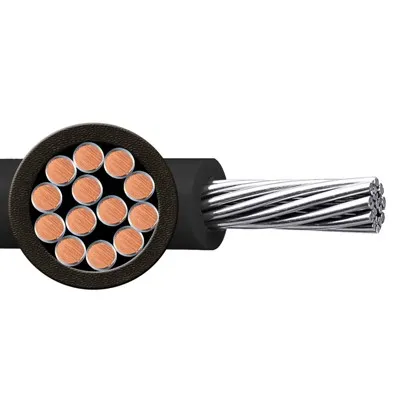
Let’s start with the basics. The center conductor is the core of an RF coaxial cable, responsible for carrying the electrical signals. A solid center conductor, as the name implies, is a single, continuous piece of metal. Usually, copper or a copper – clad material is used because of copper’s excellent electrical conductivity. The solid design ensures a straightforward path for the electrical current, minimizing signal interference from internal structure.
On the other hand, a stranded center conductor consists of multiple small wires twisted or braided together. These individual strands can also be made of high – conductivity metals like copper. The stranding process gives the cable a more flexible structure compared to the solid counterpart. This is because the individual strands can move relative to one another, reducing the likelihood of the conductor breaking under stress.
Electrical Performance
Signal Loss
One of the most critical aspects of RF coaxial cable performance is signal loss. In general, solid center conductors have lower signal loss at higher frequencies. The smooth, uninterrupted surface of a solid conductor allows the electrical signals to flow with less resistance. This is especially important in applications where high – frequency signals need to be transmitted over long distances, such as in wireless communication base stations and satellite communication systems.
Stranded conductors, due to their multi – strand structure, have a slightly rougher internal surface. At high frequencies, this can lead to increased skin – effect resistance. The skin effect causes the electrical current to concentrate on the outer surface of the conductor. With a stranded conductor, the irregularities in the surface can disrupt the flow of the current, resulting in higher signal loss compared to a solid conductor at high frequencies. However, at lower frequencies, the difference in signal loss between solid and stranded conductors is less significant.
Impedance
Impedance is another key factor that affects the performance of RF coaxial cables. Both solid and stranded center conductors can be designed to maintain a consistent impedance along the length of the cable. However, the manufacturing process for solid conductors is often more precise, which can lead to better impedance stability. This is crucial in applications where impedance matching is essential, such as in high – speed data transmission and test measurement equipment.
Stranded conductors may have slightly more variability in impedance due to the complex arrangement of the strands. However, modern manufacturing techniques can minimize this variability, and in many cases, stranded cables can still meet the strict impedance requirements of various applications.
Mechanical Properties
Flexibility
Flexibility is a major advantage of stranded center conductors. The ability to bend and flex the cable without damaging the conductor makes stranded cables ideal for applications where the cable needs to be moved or installed in tight spaces. For example, in medical equipment, such as MRI machines, the cables often need to be flexible to accommodate the movement of the equipment. Stranded conductors can withstand repeated bending and flexing without breaking, which extends the lifespan of the cable in these applications.
Solid center conductors are much less flexible. They are more prone to cracking or breaking when bent at sharp angles or subjected to repeated bending. Therefore, they are typically used in applications where the cable is installed in a fixed position and does not need to be moved frequently, such as in long – distance cable runs in buildings or outdoor installations.
Durability
Durability is closely related to flexibility. While stranded conductors are more flexible, they may be less durable in some high – stress environments. The individual strands in a stranded conductor can fray or break if the cable is subjected to excessive pulling or crushing forces. In contrast, solid conductors are more robust in terms of withstanding pulling and crushing. They are less likely to break under direct mechanical stress, making them a better choice for applications where the cable may be exposed to rough handling, such as in industrial settings.
Resistance to Vibration
In environments with high levels of vibration, such as in automotive or aerospace applications, the choice between solid and stranded conductors is also important. Solid conductors are more resistant to vibration – induced damage. Their single – piece structure does not have the weak points that can develop in a stranded conductor due to the movement of individual strands. Stranded conductors may experience strand breakage over time due to vibration, which can lead to performance degradation.
Cost Considerations
Cost is always a factor in the decision – making process when choosing RF coaxial cables. In general, solid center conductors are less expensive to manufacture. The manufacturing process for solid conductors is relatively simple, involving fewer steps and less material compared to stranded conductors.
Stranded conductors are more expensive due to the additional manufacturing processes required to twist or braid the individual strands together. The cost difference can be significant, especially for large – scale projects. However, the benefits of stranded conductors in terms of flexibility and suitability for certain applications may outweigh the cost factor in some cases.
Applications
Solid Center Conductors
Solid center conductors are often used in applications where signal performance and stability are of utmost importance. They are commonly found in high – frequency, long – distance communication systems, such as in telecommunications networks and broadcasting facilities. Their low signal loss and excellent impedance stability make them ideal for transmitting signals over extended distances without significant degradation.
In addition, solid conductors are also used in test and measurement equipment, where precision and accuracy are critical. The stable electrical performance of solid conductors ensures reliable test results, making them a preferred choice for engineers and technicians.
Stranded Center Conductors
Stranded center conductors are the go – to choice for applications that require flexibility. They are widely used in consumer electronics, such as smartphones, laptops, and gaming consoles. The cables in these devices need to be flexible to allow for easy movement and installation.
They are also commonly used in medical equipment, as mentioned earlier, and in naval and aviation applications, where the cables need to withstand vibrations and frequent movement. In these applications, the durability of the cable under repeated stress is more important than the slight increase in signal loss compared to solid conductors.
Conclusion
In summary, the choice between solid and stranded center conductors in RF coaxial cables depends on a variety of factors, including the application requirements, electrical performance needs, mechanical properties, and cost considerations. Solid conductors offer superior electrical performance at high frequencies and greater resistance to mechanical stress, but they are less flexible. Stranded conductors, on the other hand, provide excellent flexibility and are better suited for applications where the cable needs to be moved or installed in tight spaces, although they may have slightly higher signal loss and cost more.
Control Cable Low Voltage As an RF coaxial cable supplier, I understand the importance of choosing the right cable for your specific needs. Whether you need a cable for high – frequency communication or a flexible cable for a consumer electronic device, we can provide you with the best solution. If you’re interested in purchasing RF coaxial cables, or you have any questions about solid and stranded center conductors, please reach out to our sales team. We’d be happy to discuss your requirements and help you select the most suitable cable for your application.
References
- "RF and Microwave Transmission Line Design Handbook", by Joseph J. Carr
- "Coaxial Cable Handbook", by Tom Igoe
- Industry whitepapers on RF coaxial cable technology from leading cable manufacturers.
Yangzhou Huayu Cable Co., Ltd.
Yangzhou Huayu Cable Co., Ltd. is one of the most professional rf coaxial cable manufacturers and suppliers in China, also supports customized service with low price. Please feel free to wholesale advanced rf coaxial cable made in China here from our factory. Contact us for pricelist.
Address: No. 9 Jingang Road, Yangzhou City, Jiangsu Province, China
E-mail: huayucableco@126.com
WebSite: https://www.huayucabletech.com/
