As a supplier of 300mm traffic lamps, I often encounter inquiries from customers about various technical parameters of our products. One question that has come up frequently is about the power factor of a 300mm traffic lamp. In this blog post, I aim to provide a comprehensive and in – depth understanding of this topic. 300mm Traffic Lamp
Basic Concept of Power Factor
Before diving into the specific power factor of a 300mm traffic lamp, it’s essential to grasp the basic concept of power factor. In an electrical circuit, power factor (PF) is defined as the ratio of real power (P), which is the power that actually does useful work, to apparent power (S). Mathematically, it can be expressed as (PF=\frac{P}{S}).
Apparent power is the product of the voltage (V) and current (I) in an AC circuit, (S = V\times I). Real power is the power that is converted into other forms of energy such as heat, light or mechanical work. Power factor ranges from 0 to 1. A power factor of 1 indicates that all the electrical power supplied to the circuit is being used effectively, while a lower power factor implies that there is a significant amount of reactive power in the circuit, which does not contribute to useful work but still causes additional current flow in the electrical system.
Importance of Power Factor in Traffic Lamps
For 300mm traffic lamps, the power factor is of great significance for several reasons. Firstly, from an energy – efficiency perspective, a high – power factor means less wasted energy. In a traffic lighting system, which operates continuously for long periods, even a small improvement in power factor can result in substantial energy savings over time. For example, if a traffic lamp has a low power factor, the electrical grid has to supply more current than necessary to deliver the required real power. This extra current leads to increased losses in the transmission and distribution lines, as the power loss in the lines is proportional to the square of the current ((P_{loss}=I^{2}R), where (R) is the resistance of the line).
Secondly, a high – power – factor traffic lamp can reduce the load on the electrical infrastructure. Traffic lighting networks are often part of a larger electrical grid. By using lamps with high power factors, the overall demand on the grid can be reduced, which helps in preventing overloading of transformers and other electrical equipment. This can also lead to cost savings for the utility companies and, in some cases, may result in lower electricity bills for the end – users.
Factors Affecting the Power Factor of 300mm Traffic Lamps
Several factors can influence the power factor of a 300mm traffic lamp. One of the main factors is the type of lighting technology used. Traditional incandescent lamps generally have a power factor close to 1 because they are essentially resistive loads. However, incandescent lamps are highly inefficient in terms of converting electrical energy into light, as a large portion of the energy is dissipated as heat.
Most modern 300mm traffic lamps use light – emitting diodes (LEDs). LEDs are more energy – efficient than incandescent lamps, but their power factor can vary depending on the quality of the LED driver. The LED driver is an electronic device that regulates the voltage and current supplied to the LEDs. A poorly designed LED driver may introduce reactive elements into the circuit, resulting in a lower power factor.
The electrical components used in the traffic lamp, such as capacitors and inductors, also play a role in determining the power factor. Capacitors can be used to correct the power factor by compensating for the inductive reactance in the circuit. However, if the capacitor is not properly sized or installed, it may not achieve the desired power – factor correction.
Typical Power Factor of 300mm Traffic Lamps
In general, high – quality 300mm LED traffic lamps from reliable manufacturers can achieve a power factor of 0.9 or higher. This is because these lamps are equipped with advanced LED drivers that are designed to minimize reactive power. For example, some of our 300mm traffic lamps use active power – factor correction (PFC) technology in the LED driver. Active PFC circuits can continuously adjust the input current waveform to match the input voltage waveform, thereby achieving a high power factor.
On the other hand, lower – quality traffic lamps or those without proper power – factor correction may have a power factor as low as 0.5 – 0.6. These lamps not only waste energy but also put additional stress on the electrical grid.
Measuring the Power Factor of 300mm Traffic Lamps
To measure the power factor of a 300mm traffic lamp, specialized electrical measuring instruments are required. One commonly used instrument is a power analyzer. A power analyzer can measure the real power, apparent power, and power factor of an electrical device simultaneously.
The measurement process involves connecting the power analyzer to the traffic lamp while it is operating under normal conditions. The power analyzer will then display the measured values of real power, apparent power, and the calculated power factor. It’s important to note that the power factor may vary slightly depending on the input voltage and other operating conditions, so multiple measurements may be taken to get an accurate average value.
Benefits of Choosing High – Power – Factor 300mm Traffic Lamps
When purchasing 300mm traffic lamps, choosing lamps with a high power factor offers several advantages. As mentioned earlier, energy savings are a major benefit. By using high – power – factor lamps, the overall electricity consumption of the traffic lighting system can be reduced, resulting in lower energy costs for the operators.
In addition, high – power – factor lamps contribute to a more stable and reliable electrical grid. They reduce the harmonic distortion in the electrical system, which can improve the power quality and prevent interference with other electrical devices. This is especially important in large – scale traffic lighting networks, where a large number of lamps are connected to the same electrical grid.
Conclusion
Understanding the power factor of a 300mm traffic lamp is crucial for both suppliers and customers. As a supplier, we are committed to providing high – quality traffic lamps with high power factors. Our 300mm traffic lamps are designed to meet the highest energy – efficiency standards, which not only benefit our customers in terms of cost savings but also contribute to a more sustainable and reliable electrical infrastructure.
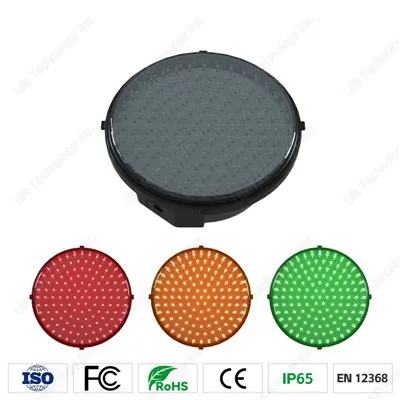
If you are in the market for 300mm traffic lamps and are interested in learning more about our products, including their power factor and other technical specifications, we encourage you to get in touch with us for a procurement discussion. We are more than happy to provide detailed product information and assist you in finding the best traffic lamp solutions for your needs.
600mm Traffic Light Timer References
- Electric Circuits Theory Textbook
- LED Lighting Technology Handbook
- Electrical Power Distribution Standards Publications
Ulit Technology Inc.
As one of the most experienced 300mm traffic lamp manufacturers and suppliers in China, we offer a wide range of products with superior quality. We warmly welcome you to wholesale bulk durable 300mm traffic lamp from our factory. If you have any enquiry about cooperation, please feel free to email us.
Address: NO.2 Mudan Road, Nan’an District, Chongqing, China
E-mail: cqulit@sina.com
WebSite: https://www.ulitcn.com/
