In the realm of mineral processing and various industrial applications, centrifugal concentrators play a crucial role in separating valuable materials from less – valuable ones. As a trusted supplier of centrifugal concentrators, I often encounter inquiries about the differences between batch – type and continuous – type centrifugal concentrators. In this blog, I’ll delve into the details of these two types, highlighting their unique features, advantages, and suitable applications. Centrifugal Concentrator
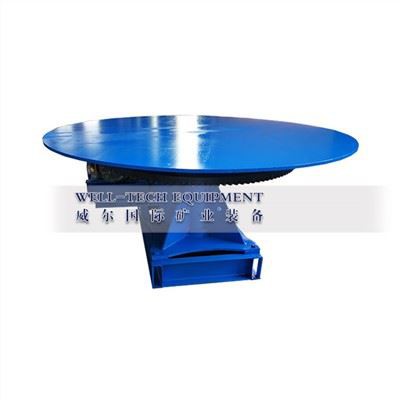
Batch – Type Centrifugal Concentrators
A batch – type centrifugal concentrator operates in a step – by – step manner. It processes a fixed amount of material in each cycle. The process typically starts with loading a specific quantity of the feed material into the concentrator. The concentrator then spins at a high speed, creating a centrifugal force that separates the heavier particles from the lighter ones.
One of the key features of batch – type concentrators is their simplicity. They are relatively easy to operate and maintain. Since they work in batches, operators have better control over the process parameters for each individual batch. This allows for more precise adjustments based on the characteristics of the feed material. For example, if the feed material has a high variability in particle size or density, the operator can adjust the spinning speed, duration of the centrifugation, and other parameters for each batch to optimize the separation efficiency.
Batch – type centrifugal concentrators are also well – suited for small – scale operations or when dealing with limited quantities of valuable materials. In situations where the feed material is scarce or the production volume is low, a batch – type concentrator can be a cost – effective solution. It can be used in research laboratories, small mining operations, or for the recovery of precious metals from electronic waste.
However, batch – type concentrators also have some limitations. The main drawback is their relatively low throughput. Since they process material in batches, there is a significant amount of downtime between each cycle for loading and unloading the material. This can limit the overall production capacity, especially in large – scale industrial applications where high – volume processing is required.
Continuous – Type Centrifugal Concentrators
In contrast to batch – type concentrators, continuous – type centrifugal concentrators operate continuously. The feed material is continuously fed into the concentrator, and the separation process occurs without interruption. This continuous operation allows for a much higher throughput compared to batch – type concentrators.
Continuous – type concentrators are designed to handle large volumes of material efficiently. They are commonly used in large – scale mining operations, where thousands of tons of ore need to be processed daily. The continuous nature of the operation also reduces the labor and time required for loading and unloading, resulting in increased productivity.
Another advantage of continuous – type centrifugal concentrators is their ability to maintain a consistent separation efficiency over time. Since the feed material is continuously flowing through the concentrator, the process parameters can be more easily regulated to ensure a stable separation performance. This is particularly important in industrial applications where product quality needs to be consistent.
However, continuous – type concentrators are more complex in terms of design and operation. They require a more sophisticated control system to ensure the proper flow of the feed material and the stability of the separation process. Additionally, the initial investment for a continuous – type concentrator is usually higher than that of a batch – type concentrator.
Differences in Design and Working Principles
The design of batch – type and continuous – type centrifugal concentrators also differs significantly. Batch – type concentrators typically have a simple structure, with a rotating bowl or drum where the separation occurs. The feed material is loaded into the bowl, and the centrifugal force causes the heavier particles to settle at the bottom of the bowl, while the lighter particles are removed through an overflow or other means.
Continuous – type concentrators, on the other hand, often have a more complex design. They may include multiple stages of separation, with different zones for feeding, separation, and discharge. The feed material is continuously introduced into the concentrator through a feed inlet, and the separated products are continuously removed through separate outlets.
The working principles of the two types also vary. In a batch – type concentrator, the separation occurs during a single, discrete cycle. The operator can control the duration of the centrifugation, the spinning speed, and other parameters to achieve the desired separation result. In a continuous – type concentrator, the separation is a continuous process, and the parameters are adjusted based on the flow rate of the feed material and the desired separation efficiency.
Applications and Suitability
The choice between a batch – type and a continuous – type centrifugal concentrator depends on several factors, including the nature of the feed material, the production volume, and the specific requirements of the application.
For applications where the feed material is heterogeneous and requires careful control of the separation process, a batch – type concentrator may be more suitable. For example, in the recovery of gold from placer deposits, where the gold particles may have different sizes and densities, a batch – type concentrator allows for more precise adjustment of the process parameters to maximize the recovery rate.
On the other hand, for large – scale industrial applications where high – volume processing is required, a continuous – type concentrator is the preferred choice. In the mining industry, continuous – type concentrators are widely used for the separation of various minerals, such as copper, iron, and zinc. They can handle large amounts of ore efficiently and produce a consistent quality of concentrate.
Conclusion

In conclusion, both batch – type and continuous – type centrifugal concentrators have their own advantages and limitations. Batch – type concentrators offer simplicity, precise control, and are suitable for small – scale operations and materials with high variability. Continuous – type concentrators, on the other hand, provide high throughput, consistent performance, and are ideal for large – scale industrial applications.
Electrostatic Separator As a supplier of centrifugal concentrators, I understand the importance of choosing the right type of concentrator for your specific needs. Whether you are a small – scale miner, a research institution, or a large – scale industrial operation, I can help you select the most suitable centrifugal concentrator for your application. If you are interested in learning more about our centrifugal concentrators or would like to discuss your specific requirements, please feel free to contact us for a detailed consultation. Our team of experts is ready to assist you in making the best decision for your business.
References
- "Mineral Processing Technology: An Introduction to the Practical Aspects of Ore Treatment and Mineral Recovery" by Barry A. Wills and Tim Napier – Munn.
- "Centrifugal Separation in Chemical Engineering" by A. S. Michaels.
Jiangxi Well-tech International Mining Equipment Co., Ltd.
Jiangxi Well-tech International Mining Equipment Co., Ltd. is one of the most professional centrifugal concentrator manufacturers and suppliers in China, featured by quality products and good service. Please rest assured to wholesale customized centrifugal concentrator at competitive price from our factory.
Address: Guzhang Industrial Park of Shicheng County, Ganzhou City, Jiangxi Province, China
E-mail: mily@benefication.com
WebSite: https://www.cn-welltech.com/
