If you’ve ever spent time researching certificate authority (CA) systems—whether you’re a DevOps lead tuning your organization’s security stack, a CIO auditing digital trust infrastructure, or a small business owner just learning how to keep customer data safe—you’ve probably stumbled over the same question: Is a CA System cloud-based? As a CA system supplier who’s been in this space for 12 years, I’ve fielded this exact question a hundred times, and the answer isn’t a simple yes or no. It’s nuanced, tied to how you define “cloud-based” in the first place, and deeply dependent on what your organization actually needs from its trust backbone. Let’s break this down like I would during a casual coffee chat with a client, no jargon overload, just real talk about what works, what doesn’t, and why it matters for your security. CA System
First, let’s get one thing straight: my team and I didn’t fall for the hype that all “modern” security tools are cloud-based. Back in 2012, when I started out, almost every CA system ran on on-premises servers, tucked away in server closets or data centers that IT teams locked down tighter than Fort Knox. Back then, “cloud” was a buzzword, but people were still scared to put something as critical as a CA into a third-party’s hands. CAs aren’t just tools that issue certificates—they’re the root of digital trust. If your CA is compromised, every website, app, or service you secure is at risk of being impersonated. So that fear wasn’t baseless.
But fast forward to today, and the definition of cloud-based has shifted hard. What does “cloud-based” even mean, anyway? To some people, it means the entire CA runs in a public cloud like AWS or Azure, no in-house hardware involved. To others, it means you can access the CA from anywhere, without needing to log into a local server. And to many security teams, it means a hybrid model that splits the difference between on-prem control and cloud flexibility. That’s the sweet spot we’ve focused on as a supplier, because we saw early on that no one model fits every business.
Let’s talk about the cloud-native CA systems that exist today, because they’re not just the shiny new toys—they solve very real problems for companies with distributed teams. For example, if you’re a SaaS company with engineers working across three continents, or a retail brand with 500 stores across 20 countries, you don’t want your CA tied to a single on-prem server in your headquarters. If that server goes down for maintenance, your entire organization can’t issue new certificates to secure payment portals or employee devices. Cloud-native CAs live in multiple Availability Zones, so if one region has an outage, the rest keep running. That kind of uptime is non-negotiable for modern businesses, and it’s one of the biggest reasons companies make the switch.
But here’s the part most blog posts and sales pitches leave out: not all cloud-based CAs are created equal. I’ve seen clients come to us after trying a “cloud-based” CA from a big name supplier that was actually just a rebranded on-prem tool hosted in someone else’s data center—no real cloud architecture, no built-in redundancy, just the same old software running in a virtual machine. The difference between that and a true cloud-based CA is that the latter is built from the ground up to leverage cloud infrastructure: auto-scaling, integrated identity and access management (IAM) that syncs with your company’s existing tools, and built-in logging that you can pull in real time without managing your own log servers. That’s the kind of cloud-based CA we build, and it’s a game-changer for teams tired of babysitting servers.
Now, what about on-prem CAs? Are they dead? Absolutely not. There are still use cases where a cloud-based CA just doesn’t make sense, and that’s why we offer on-prem options too. For example, if you work in healthcare, finance, or government—industries with strict data residency laws that require all sensitive data to stay within physical borders—you can’t host your core CA in a public cloud that might store data across multiple countries. In those cases, running a CA on your own secure, private servers gives you full control over your root keys, which is the single most important part of a CA. If you lose or leak your root keys, you lose all trust in your system, so control over that part is non-negotiable for regulated industries.
That’s where the confusion comes in, I think. A lot of people ask “Is CA System cloud-based?” like it’s a one-size-fits-all label, but it’s not. At our company, we’ve found that most organizations actually benefit from a hybrid approach. Let me explain. Suppose you’re a mid-sized manufacturing company with 2,000 employees, a public website, and a fleet of IoT devices across your factory floor. Your core root and intermediate CAs can run on-prem, in your own locked-down data center, so you keep full control over your most critical trust assets. But the process of issuing certificates to employees’ laptops, your website, and your IoT devices can run in the cloud. That way, your DevOps team doesn’t have to log into your on-prem server every time they need to issue a new certificate, and your factory managers can manage IoT certificates from their phones without waiting for IT to come on-site. It’s the best of both worlds—control over the most sensitive parts, flexibility for the day-to-day work.
I want to be transparent here, because I know as a customer, you hate when suppliers sugarcoat things. A lot of people worry that cloud-based CAs are less secure than on-prem ones, and that’s a valid concern. But here’s the thing: over the last five years, the number of high-profile CA breaches has dropped sharply, and many of those breaches involved poorly managed on-prem CAs, not cloud ones. Why? Because cloud CA providers invest millions in security that most small to mid-sized companies can’t afford on their own. They have dedicated security teams, regular penetration testing, end-to-end encryption, and compliance audits that happen every single quarter, not just when they need to renew a certificate. That’s not to say on-prem CAs are never secure—if you have a big enough security team to audit and update your on-prem CA regularly, they can be very secure. But for most companies, that level of dedicated security is out of reach.
Let’s talk about real-world examples from our clients to make this concrete. Last year, we worked with a non-profit organization that runs 12 community centers across the Midwest. They had an on-prem CA that their IT guy managed part-time, and last year, their server died unexpectedly. It took them three days to get a new server up and running, and in that time, they couldn’t issue new certificates to secure their volunteer sign-in portals or their telehealth tools. They came to us because we offered a cloud-based CA that synced with their existing IAM tool, so when their old server went down, the cloud system automatically took over, with no downtime. Now, they use a hybrid model: their root CA still lives on a secure server in their main office, but all daily operations—issuing certificates, revoking ones that are compromised, reporting on certificate expiration—run in the cloud. They save 15 hours a week on IT admin, and they haven’t had a security incident related to certificates since.
Another client is a regional bank with 15 branches. They can’t host their core CA in a public cloud due to banking regulations, so they run their intermediate CAs on-prem, but they use our cloud-based tool to automate certificate renewals for their internal banking apps and employee devices. Before, they had to manually renew 200 certificates a month, which meant missed deadlines and expired certificates that left apps inaccessible. Now, the cloud tool sends automated reminders, checks for expirations, and renews certificates without any manual work. It’s not fully cloud, and it’s not fully on-prem—it’s exactly what they need.
So, going back to the original question: Is CA System cloud-based? The short answer is: it can be, depending on your needs. If you’re a company that values flexibility, uptime, and low admin overhead, a true cloud-based CA (built for the cloud, not just hosted there) is probably the right choice. If you’re in a regulated industry that needs full physical control over your trust assets, an on-prem or hybrid CA is better. And if you’re somewhere in between, a hybrid model gives you the control you need for your most sensitive data and the convenience you need for daily operations.
I also want to address a common misconception I hear all the time: that cloud-based CAs are only for big companies. That’s not true at all. We have small businesses with 50 employees using our cloud-based CAs, because they don’t have the budget for a full-time IT security team to manage on-prem servers. Our cloud tool is simple to use, has built-in compliance for small businesses, and costs a fraction of what an on-prem CA would cost to set up and maintain.
At the end of the day, the best CA system for your business isn’t the one that’s labeled “cloud-based” or “on-prem”—it’s the one that fits your security requirements, your budget, and how your team works. We’ve spent years building flexible CA solutions because we know that every organization’s needs are different.
If you’re still trying to figure out what kind of CA system makes sense for your business, we’re here to help. We don’t do one-size-fits-all sales pitches, and we won’t try to pressure you into buying something that doesn’t fit. We’d be happy to walk through your specific use cases, answer any questions you have about cloud vs on-prem vs hybrid, and help you find the right solution for your team. Reach out to our team to start the conversation about tailored solutions for your organization.
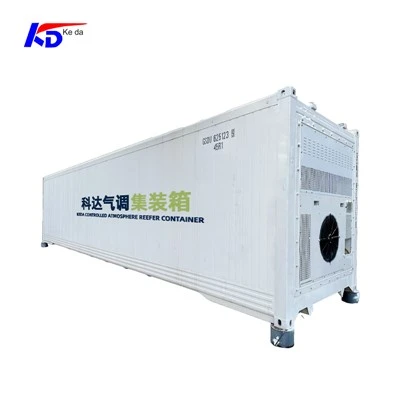
Controlled Atmosphere Reefer Container References
- Internet Security Research Group (ISRG). (2023). Certificate Authority Best Practices Framework. Retrieved from industry security compliance standards repository
- Cloud Security Alliance (CSA). (2022). Cloud Certificate Authority Security Guidelines. Retrieved from global cybersecurity industry publications
- National Institute of Standards and Technology (NIST). (2021). SP 800-52 Rev. 2: Guidelines for the Selection, Configuration, and Use of Transport Layer Security (TLS) Implementations. Retrieved from U.S. government technology standards database
- Gartner, Inc. (2023). Magic Quadrant for Cloud-Centric Certificate Authority Infrastructure. Retrieved from independent technology industry research reports
Yantai Keda Zhixian International Trade Co., Ltd.
As one of the leading manufacturers and suppliers of ca system in China, we have world-leading production equipment and strong manufacturing capabilities. Please feel free to buy high-grade ca system for sale here from our factory.
Address: No.18-2, Wuhan St, Yantai ETDZ, Yantai, Shandong, China
E-mail: ytkeda2026@163.com
WebSite: https://www.kedacastorage.com/
