Alright, let’s cut to the chase—if you’re in the chair parts game (which I know you are, since you’re here), nailing chair leg height measurement is non-negotiable. Mess this up, and you’ll end up with wobbly chairs, frustrated furniture makers, and that “why didn’t this fit?” email in your inbox. I’ve been selling chair legs and hardware for over 8 years, and let me tell you, most folks get this wrong. Either they eyeball it, or they grab a tape and wing it—big mistake. Let’s break this down like we’re in my warehouse, not a stuffy lab. Chair Parts

First, let’s get clear on what we’re actually measuring. Wait, “height” is vague. Is it from the floor to the bottom of the seat? Yeah, that’s the big one, but don’t sleep on leg length vs. total chair height. A chair leg’s total length is the metal or wood stick itself, but when you attach a foot cap or glide? That adds a tiny bit. If you’re selling replacement legs, your customer might not know that—so it’s your job to spell it out. I’ve had a client order 100 oak legs, got them, and hit me up saying they’re 1/4 inch too short. Turned out they forgot their glides were 1/4 inch thick. Oops. Lesson #1: Always clarify if they need leg “raw length” or “installed length” (leg + glide/foot cap).
Now, the tools you actually need—no fancy lab gear. A standard tape measure (the retractable kind, not the one from a kids’ craft kit), a flat surface (your workshop table works), a carpenter’s square (to make sure things are straight), and a bubble level (or even your phone level app—trust me, I use the same one) if you’re checking alignment. Skip the laser measurers for this—they’re overkill for small chair parts and can throw off if there’s a crumb on the floor. Pro tip: Grab a spare piece of cardboard to set the chair on if your workbench has a lip—keeps the bottom of the legs from catching.
Let’s walk through step-by-step, the way I teach my new warehouse guys. First, prep the chair (or the replacement leg, if that’s what you’re measuring). If it’s an assembled chair, flip it UPSIDE DOWN on the flat surface—seat facing the table, legs sticking up. This is way easier than kneeling on the floor and reaching under the seat. Make sure the chair is stable—no wiggling. If it’s a replacement leg, set it on the flat surface so the end that touches the floor is on the table, and the top end (where it attaches to the seat) is facing up.
Next, measure the RIGHT spot. Don’t hold the tape at a slant—everyone does this, and it adds up to 1/4 inch of error, which is a huge deal when you’re making 500 chairs. Line the end of the tape (the “hook” part) perfectly with the bottom of the leg’s floor contact point. If it’s a wooden leg with a recessed area for a glide, hook the tape onto the edge of that recess, not the middle—you’ll get a more consistent number. Then, pull the tape straight up to the TOP of the leg’s seat attachment. Wait, what if the leg has a threaded insert or a mounting plate? Don’t measure to the plate—measure to the very top of the leg’s body. The plate is extra hardware, so your customer will handle that separately. I once had a competitor’s leg customer tell me theirs was too tall, and it turned out they measured to the plate instead of the leg itself. That’s a $2k return they lost—we don’t do that.
Now, check for consistency across all four legs. This is make or break. Even a 1/8 inch difference between front and back legs will make the chair rock like a boat on water. I tell my clients to measure each leg twice—once at the very center of the leg, and once 1 inch off center (for round legs) or along the edge (for square legs). If the two numbers are within 1/32 inch, you’re good. If not, the leg is warped, and you should toss it (we have a 1% return rate for warped legs because we check this, fyi). Here’s a trick: Line all four legs up side by side on the workbench, so their bottom ends are flat against the table. Hold a straight edge (like the carpenter’s square) across the top ends. If one is sticking up more than a tiny sliver, you’ve got a length difference.
Wait, what about adjustable legs? Those are super popular now for office chairs. Measuring those is a little different. First, set the leg to the height your customer needs (most adjustable legs have a lock, so make sure it’s engaged). Then measure from the bottom of the adjustable glide to the top of the leg’s mounting bolt. Don’t measure the adjustable range—only the actual set height. I’ve had a customer order adjustable legs thinking “max height” would work, but they needed the middle range, and we had to adjust on the fly. A quick note in your product description: “Measured height is for locked, mid-range setting” saves everyone time.
Common mistakes to avoid, because I’ve made every single one. 1) Measuring from the floor to the seat top instead of the leg length. That’s a totally different number! The seat thickness is 1/2 inch to 1 inch, so if you measure seat top instead, your leg will be 1 inch too short. 2) Forgetting the glide. As I said earlier, a standard rubber glide is 1/4 inch—if you’re replacing legs, your customer might not account for that, so always mention it in your product specs. 3) Ignoring floor imperfection. If you’re measuring an assembled chair on a concrete floor, a tiny crack or bump can make the leg height seem off. Flip the chair onto a flat surface instead, way more accurate. 4) Using a soft measuring tape. Those fabric ones stretch, and you’ll get a wonky number. Stick to a rigid steel tape measure—they’re $5 at the hardware store, worth every penny.
Now, why does this matter for YOU? If you’re a furniture maker buying chair parts, getting the height right means less assembly time, no returns, and happier customers. If you’re a replacement part buyer, accurate measurements mean the leg fits perfectly on that vintage dining chair you’re fixing. At our shop, we print a quick “measurement cheat sheet” with every bulk order—we draw a chair, point to “leg length (raw)” and “leg length (with glide)” so there’s no confusion. We also offer custom cut legs for when a customer needs a specific height that’s not in our stock—just send us a quick photo of your flipped chair with a tape measure, and we’ll cut them to the thousandth of an inch.
Wait, still confused? No sweat. Here’s a quick test: Grab a chair you’re working on, flip it over, stick your tape from the bottom of the leg (not the glide!) to the top of the leg where it meets the seat. Write that number down. Now, if you’re buying from us, just tell us that number—raw leg length— and if you’re using your own glides, we can adjust the leg length to compensate. If you’re using the glides we sell, just add 1/4 inch to the number you measured, and that’s the leg you need. It’s that simple.
Look, I get it—you’re busy. You don’t have time to fuss with measurements that cause headaches. That’s why we’ve streamlined this for our customers: clear specs, a 30-day return policy if something’s off (rare, but we stand behind our parts), and a team that knows chairs inside and out. Whether you need 10 replacement legs for a coffee shop table or 1000 custom legs for a new line of dining chairs, we’ve got you.
Don’t waste another minute guessing. Get the right measurements, and let’s make your chair project go smooth. If you’ve got questions, need help double-checking a measurement, or want to chat about custom parts, hit us up—we’re here to make this easy. Stop dealing with wobbly chairs and wrong parts. Let’s get it right, together.
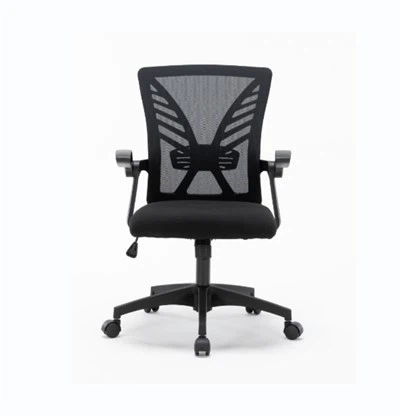
Mesh Office Chair References
- Woodworking Network. (2022). "Precision Measuring Techniques for Furniture Components."
- American Society of Furniture Designers. (2021). "Standard Specifications for Chair Part Dimensional Accuracy."
- Myron, J. (2019). "Practical Measurement Tips for Replacement Furniture Parts." (Personal warehouse operations manual)
Zhejiang Zhenxing Furniture Technology Co., Ltd.
Zhejiang Zhenxing Furniture Technology Co., Ltd. is known as one of the most professional chair parts manufacturers and suppliers in China. Our factory offers high quality chair parts made in China with competitive price. Welcome to contact us for wholesale service.
Address: 1905#, Building 1, Financial Center Building, No. 61th South Of Fuyu Road, Lingfeng Street, Dipu town, Anji Country, Zhejiang, China
E-mail: andrew@zhenxingfurniture.com
WebSite: https://www.zxtopfurniture.com/
