Coolant plays a pivotal role in the world of grinding, significantly influencing both the performance of the grinding wheel and the overall grinding process. As a trusted supplier of grinding wheels, I’ve witnessed firsthand the transformative impact that coolant can have on the efficiency, precision, and longevity of the grinding tools. In this blog, I’ll delve into the multifaceted relationship between coolant, grinding wheels, and the grinding process, providing insights based on real – world experience and scientific knowledge. Grinding Wheels

How Coolant Affects the Grinding Wheel
Wear and Tear Reduction
The most obvious way coolant affects the grinding wheel is by reducing wear and tear. During the grinding process, a substantial amount of heat is generated due to the friction between the grinding wheel and the workpiece. Excessive heat can cause the abrasive grains on the grinding wheel to break down prematurely. Coolant acts as a heat – transfer medium, absorbing and carrying away the heat from the contact zone.
For instance, in high – speed grinding operations where the contact time between the wheel and the workpiece is extremely short, the temperature can rise to a very high level rapidly. Without coolant, the abrasive grains may overheat, their hardness can decrease, and they may fracture or become dislodged from the wheel’s surface. However, when coolant is properly applied, it can maintain the temperature of the grinding wheel within a reasonable range. This helps to preserve the integrity of the abrasive grains and the bond that holds them together, thus extending the useful life of the grinding wheel.
Wheel Loading Prevention
Wheel loading is another common problem in grinding. It occurs when chips of the workpiece material become embedded in the pores of the grinding wheel, clogging it and reducing its cutting ability. Coolant can effectively prevent wheel loading. The flow of coolant acts as a flushing mechanism. It washes away the chips and debris from the wheel surface as soon as they are generated.
In a grinding operation involving soft and ductile materials like aluminum, for example, the chips are likely to be sticky and tend to adhere to the wheel. The coolant, with its lubricating and flushing properties, can dislodge these sticky chips, keeping the wheel’s cutting edges clean and sharp. This ensures that the grinding wheel remains efficient throughout the process, reducing the need for frequent dressing.
Maintaining Sharpeness
A sharp grinding wheel is essential for achieving high – quality surface finishes and accurate dimensional tolerances. Coolant helps in maintaining the sharpness of the grinding wheel by promoting the self – sharpening action of the abrasive grains. As the grinding wheel wears, the dull grains break away under the action of the coolant – assisted forces, exposing fresh, sharp grains.
The cooling effect of the coolant also prevents the dulling of the grains due to excessive heat. In a well – cooled grinding environment, the abrasive grains can maintain their cutting edges for a longer time. This is particularly important in precision grinding, where even the slightest loss of sharpness can lead to significant deviations in the workpiece’s dimensions and surface quality.
How Coolant Affects the Grinding Process
Improved Surface Finish
One of the key benefits of using coolant in the grinding process is the improvement of the workpiece’s surface finish. As mentioned earlier, coolant helps to keep the grinding wheel sharp and free from loading. A sharp and unclogged wheel can make smoother cuts on the workpiece surface.
Moreover, the lubricating properties of the coolant reduce the friction between the wheel and the workpiece. This minimizes the scratching and tearing of the workpiece surface, resulting in a finer and more uniform surface finish. For applications where a high – quality surface finish is critical, such as in the manufacturing of precision components for the aerospace or medical industries, the use of the right coolant can make a world of difference.
Dimensional Accuracy
Dimensional accuracy is of utmost importance in grinding operations. The heat generated during grinding can cause thermal expansion of both the workpiece and the grinding wheel, which can lead to dimensional errors. Coolant helps to control the temperature, thereby minimizing thermal expansion.
By keeping the temperature stable, the coolant ensures that the dimensions of the workpiece and the grinding wheel remain consistent throughout the grinding process. This is especially crucial in tight – tolerance grinding, where even a small change in temperature can result in a part being out of spec. For example, in the production of gears, where precise tooth profiles and dimensions are required, the use of coolant enables the achievement of the desired accuracy.
Productivity Enhancement
Coolant can significantly enhance the productivity of the grinding process. As discussed, it reduces wheel wear, prevents wheel loading, and maintains wheel sharpness. All these factors contribute to longer wheel life and less frequent wheel dressing or replacement.
In addition, the improved surface finish and dimensional accuracy achieved with coolant mean fewer rejects and rework. This allows the grinding operation to run more smoothly and continuously, increasing the overall throughput. For a manufacturing facility, this translates into higher production volumes and reduced costs.
Types of Coolants and Their Suitability
There are different types of coolants available, each with its own characteristics and suitability for specific grinding applications.
Water – Based Coolants
Water – based coolants are the most commonly used type. They are cost – effective, have good cooling properties, and are environmentally friendly. They can be further divided into emulsions, semi – synthetic, and synthetic coolants.
Emulsion coolants consist of oil droplets suspended in water. They offer good lubrication and cooling, making them suitable for general – purpose grinding operations. Semi – synthetic coolants contain a smaller amount of oil and more additives, providing a balance between lubrication and cooling. They are often used in high – speed grinding and applications where a better surface finish is required. Synthetic coolants, on the other hand, do not contain oil. They have excellent cooling ability, are resistant to bacteria growth, and are ideal for precision grinding operations.
Oil – Based Coolants
Oil – based coolants provide superior lubrication compared to water – based coolants. They are particularly suitable for grinding hard and brittle materials such as ceramics and carbides. The high lubricity of oil – based coolants reduces the risk of cracking and chipping of the workpiece. However, they are more expensive, have poor cooling properties compared to water – based coolants, and may pose environmental and health risks.
Application and Maintenance of Coolant
Proper Application
The proper application of coolant is crucial for its effectiveness. The coolant should be applied directly to the contact zone between the grinding wheel and the workpiece. This can be achieved through various methods, such as flood cooling, mist cooling, and jet cooling.
Flood cooling involves continuously flooding the grinding area with a large volume of coolant. It is suitable for most grinding operations, especially those with high heat generation. Mist cooling sprays a fine mist of coolant onto the grinding area, which provides good lubrication and cooling with less coolant consumption. Jet cooling uses a high – pressure jet of coolant to target the contact zone precisely, and it is often used in high – speed grinding and difficult – to – access areas.
Maintenance
Regular maintenance of the coolant is necessary to ensure its performance. The coolant’s concentration, pH level, and cleanliness should be monitored regularly. Over time, the coolant can become contaminated with chips, debris, and bacteria. Filtering the coolant can remove the solid contaminants, while adding biocides can control bacteria growth.
Replacing the coolant at appropriate intervals is also important, as the coolant’s properties can degrade over time due to usage and exposure to the environment.
Conclusion
In conclusion, coolant is an indispensable component in the grinding process, with far – reaching effects on both the grinding wheel and the overall grinding operation. It reduces wheel wear, prevents wheel loading, improves surface finish, ensures dimensional accuracy, and enhances productivity. As a grinding wheel supplier, I understand the importance of choosing the right coolant for different applications and applying and maintaining it correctly.
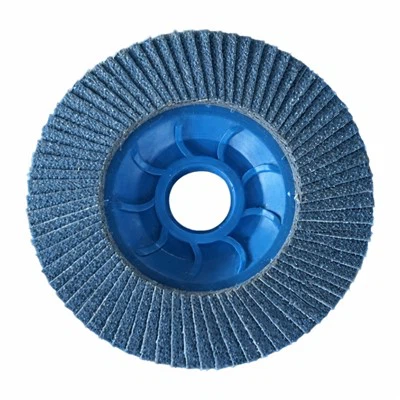
Zirconia Alumina Flap Disc If you are looking for high – quality grinding wheels or need advice on the best coolant for your specific grinding needs, I’m here to help. I can offer a wide range of grinding wheels suitable for various materials and applications. Let’s start a conversation about your grinding requirements, and together we can optimize your grinding process for better results and cost – effectiveness.
References
- Trent, E. M., & Wright, P. K. (2000). "Metal Cutting". Butterworth – Heinemann.
- Shaw, M. C. (2005). "Metal Cutting Principles". Oxford University Press.
- Rowe, W. B. (2009). "Principles of Modern Grinding Technology". Springer.
Henan Yandisc Hardware Tools Co., Ltd.
Address: Zinan Road, High-tech Industrial Development Zone, Zhengzhou, Henan, China
E-mail: info@yandisc.com
WebSite: https://www.yandisc.com/
